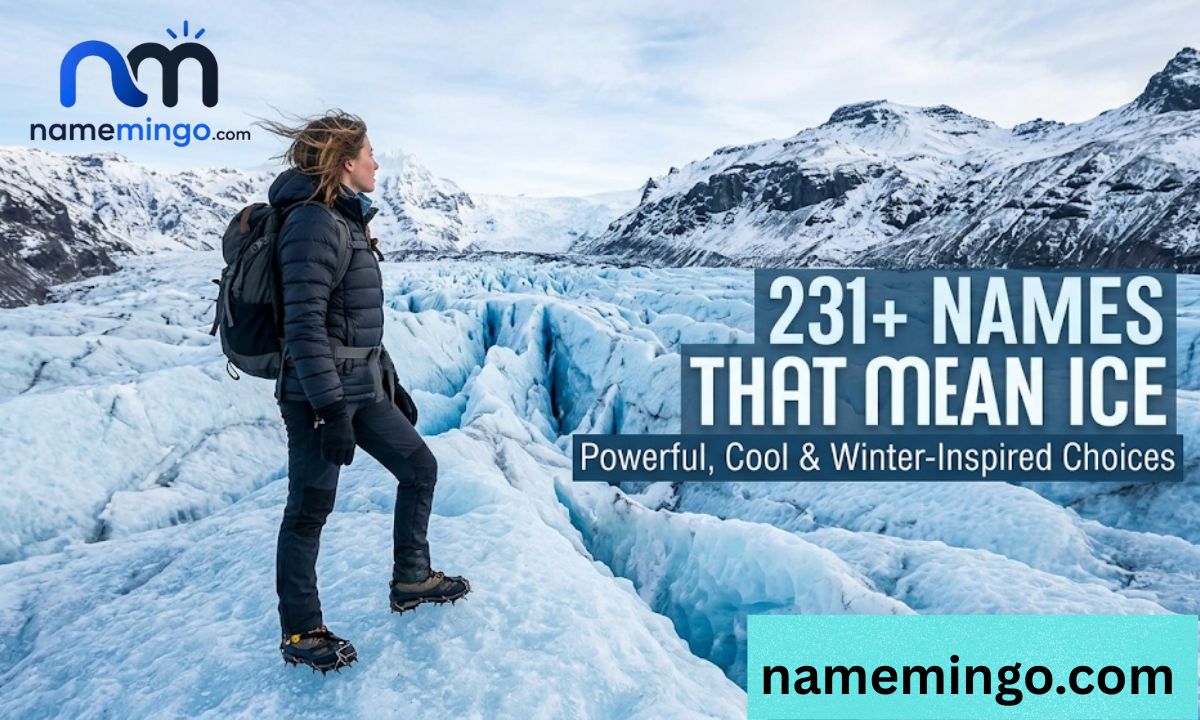
Ice has always meant something more than cold weather. It stands for strength, calm, and quiet power. Many parents want a name that carries this feeling.
Names that mean ice come from many cultures and languages. Some sound soft and gentle, like snowflakes falling. Others sound bold and strong, like a frozen mountain peak.
These names work well for both boys and girls. They bring a wintery charm that feels timeless and fresh. Below, you will find a list full of icy inspiration.
Girl names that mean ice
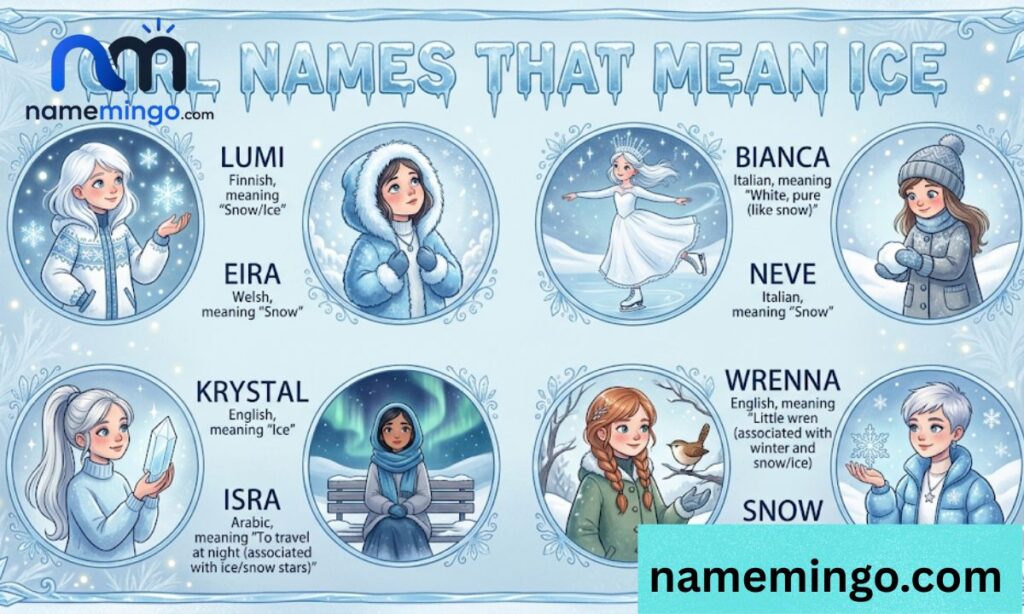
These names lean soft and elegant while still carrying that crisp, wintry edge.
- Yuki – Japanese, “snow”
- Eira – Welsh, “snow”
- Neva – Slavic origin, “snow”
- Chione – Greek, “daughter of the snow”
- Nieves – Spanish, “snows”
- Blanca – Spanish, “white,” often linked to snow imagery
- Crystal – English, evokes ice-clear brilliance
- Talvikki – Finnish, “born in winter”
- Skadi – Norse, goddess associated with winter and skiing
- Frostine – modern coinage, “of frost”
- Glacia – Latin-rooted, “icy, glacier-like”
- Snežana – Slavic, “snow girl”
- Sniega – Latvian, “snow”
- Lumi – Finnish, “snow”
- Vinterly – modern, “touched by winter”
- Icelyn – modern blend of “ice” and the popular suffix “-lyn”
- Snowla – modern, soft and snow-inspired
- Fryda – Norse-inspired, evoking cold beauty and peace
- Hima – Sanskrit, “snow” (as in Himalaya)
- Zimara – Slavic-rooted feminine form of “winter”
Names that mean ice or snow boy
Strong, grounded, and a little rugged these names suit a boy with a quiet, steady presence.
- Jökull – Icelandic, “glacier”
- Frost – English, straightforward and striking
- Sleet – English, a wintry weather name
- Boreas – Greek, god of the cold north wind
- Yukio – Japanese, “snow boy”
- Snæbjörn – Norse, “snow bear”
- Talvi – Finnish, “winter”
- Mróz – Polish, “frost”
- Zimovit – Slavic, “one who lives through winter”
- Glacius – modern Latin-style, “icy”
- Frosthelm – modern coinage, “frost-protected”
- Wintergard – modern, “guarded by winter”
- Skadon – modern variant inspired by Skadi
- Sneguro – Slavic, rooted in snow folklore
- Frostan – modern, short and strong
- Icer – modern, edgy and minimal
- Cryos – Greek-rooted, “cold”
- Polaris – Greek/Latin, the北 “pole star,” linked to icy northern skies
- Winterton – English, “winter settlement”
- Hagan – Old Norse-inspired, evokes “hail” and harsh winter storms
What is a name that means ice
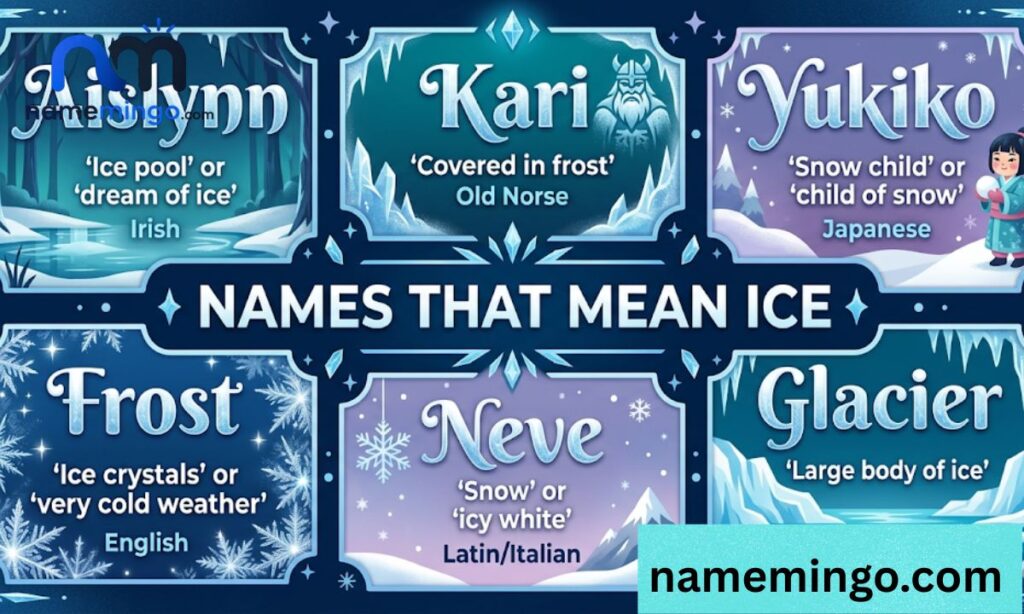
A name that means ice is any name whose origin word directly translates to “ice,” “frost,” “snow,” or “winter” in its source language. Some come from mythology like Khione, the Greek goddess of snow while others come from everyday vocabulary, like Yuki (Japanese for snow) or Frost (English). These names often carry symbolic weight too, suggesting clarity, resilience, and calm under pressure, which is part of why they’ve stayed popular across so many cultures and centuries.
A girl name that means ice
If you want one standout example, Isolde is a great pick its Old Germanic roots break down roughly to “ice” and “rule,” giving it the poetic meaning “ice ruler.” It’s been used in legend (most famously the tragic romance of Tristan and Isolde) for centuries, so it manages to feel both ancient and elegant. Other strong options include Chione, Eira, and Glacia, each offering a slightly different texture mythological, soft, or modern.
A Japanese name that means ice
In Japanese, Kori (氷) is a direct and simple word for “ice,” often used as a name on its own or as part of a longer one. Hyoka, meaning “ice flower,” adds a touch of poetry, while Reito, drawn from the word for “frozen,” feels a bit more modern and unconventional. These names are popular partly because Japanese naming traditions often blend nature imagery directly into everyday vocabulary, so the meaning is immediately recognizable to native speakers.
Top 5 Trending Picks in 2026

Based on naming pattern shifts toward short, nature-based, and gender-flexible names, these five stand out as the ones most likely to gain traction this year:
- Frost – short, strong, and increasingly used for all genders
- Yuki – globally familiar thanks to Japanese pop culture and anime
- Skadi – riding the wave of renewed interest in Norse mythology
- Snow – minimalist and already popular in fiction and fashion
- Eira – soft, Welsh-rooted, and quietly rising in usage charts
Why Ice-Inspired Names Feel Powerful
Ice is one of those elements that feels contradictory in the best way it’s fragile, but it can also stop a river in its tracks. Names tied to ice and snow tend to inherit that duality, sounding gentle on the surface while hinting at something tougher underneath. That balance is part of why they resonate so strongly with parents looking for something meaningful but not overly soft.
There’s also a sense of clarity that comes with these names. Ice is transparent, clean, and undisturbed qualities that translate nicely into a name meant to represent calm confidence rather than loud ambition. It’s a quieter kind of strength, the sort that doesn’t need to announce itself.
Finally, winter itself has long been associated with renewal in many cultures a season of rest before new growth. Naming a child after ice or snow can carry that same quiet promise: a fresh start, a clean slate, and the kind of resilience that gets a person through the coldest stretches.
Also Read This :239+ Names That Mean Tiger in Fierce & Powerful Baby Names 2026
Scandinavian and Nordic Ice Names
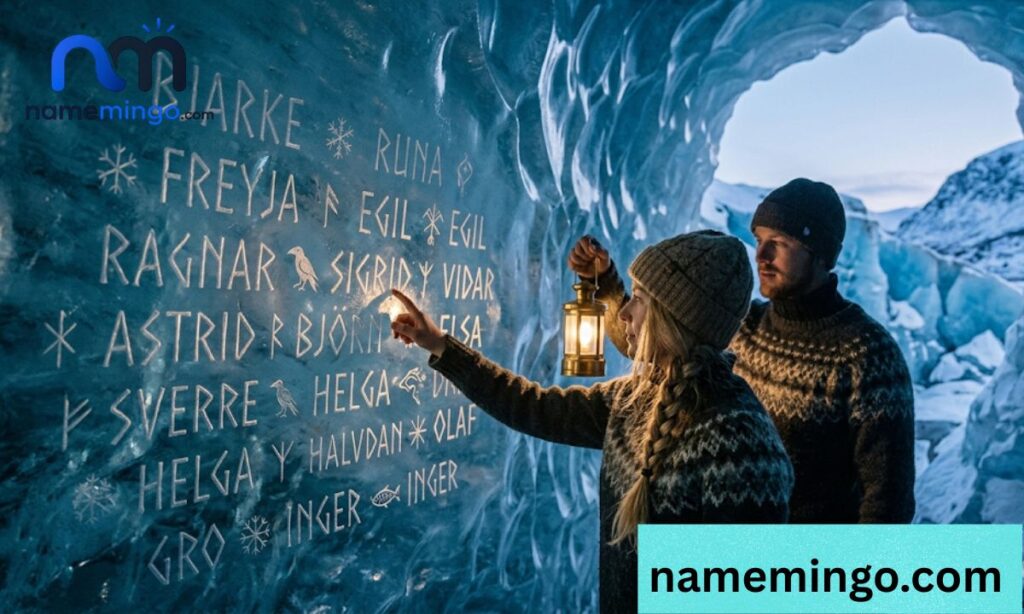
Drawing from Old Norse and modern Icelandic, these names feel mythic and weathered by centuries of harsh winters.
- Jökull – “glacier”
- Skadi – goddess of winter and mountains
- Frigg – Norse goddess linked to sky and household, often associated with cold northern climates
- Vinter – “winter” (Scandinavian)
- Snjólfur – “snow wolf”
- Hagal – Old Norse, “hail”
- Ísleif – “ice heir”
- Frostbjørn – “frost bear”
- Kuldi – Icelandic-rooted, “cold”
- Vetur – Icelandic, “winter”
- Snæfríður – “snow-beautiful”
- Isolde – “ice ruler”
- Iseult – variant of Isolde
- Frostrún – “frost rune”
- Rosti – inspired by Old Norse frost terminology
- Vinterro – modern Nordic-style coinage
- Snæland – “snow land”
- Kaldr – Old Norse, “cold”
- Frosti – Old Norse name meaning “frost”
- Snæþór – “snow Thor,” a wintry twist on a classic Norse name
Japanese Names That Mean Ice or Snow
Japanese naming traditions often weave nature directly into a name’s meaning, and snow imagery is especially common.
- Yuki – “snow”
- Yukiko – “snow child”
- Yukio – “snow man”
- Yukine – “snow sound”
- Setsuko – “snow child” (alternate kanji)
- Kori – “ice”
- Hyoka – “ice flower”
- Saeko – “cool, clear child,” often linked to cold clarity
- Reito – “frozen”
- Fubuki – “snowstorm”
- Shimo – “frost”
- Mizore – “sleet”
- Koori – alternate reading of “ice”
- Yukimi – “snow viewing”
- Shirayuki – “white snow”
- Yukina – feminine form related to snow
- Touya – “frozen night”
- Reiya – modern blend of “frozen” and “night”
- Hyoga – loosely “ice fang/moon,” popularized in pop culture
- Setsumi – modern blend, “snow beauty”
Slavic and Eastern European Frost Names
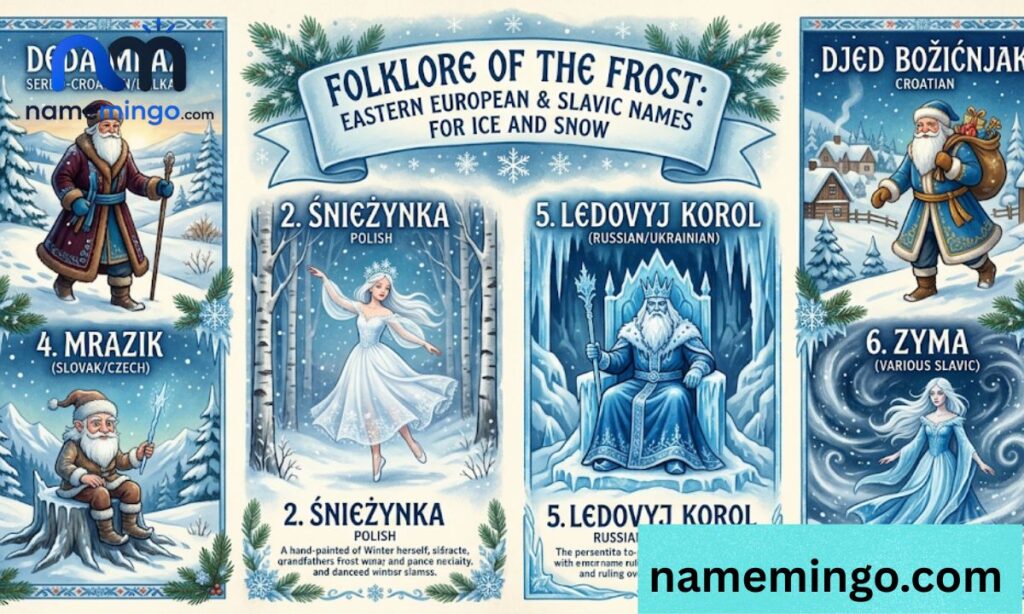
These names often come from folklore figures tied to harsh winters and snow spirits.
- Sneguro – rooted in snow folklore
- Snezhana – “snow” (feminine)
- Zima – “winter”
- Zimovit – “one who lives through winter”
- Mroz – “frost”
- Morozko – frost figure from Russian folklore
- Snezhka – “little snow” (feminine)
- Ledenko – “icy,” from “led” (ice)
- Ledana – feminine form of “ice”
- Studenka – from “studeny,” meaning “cold”
- Zimara – invented feminine form of “winter”
- Lyodok – “little ice,” a playful diminutive
- Snezhko – “snowy”
- Studen – rooted in the Slavic word for “cold”
- Vyuga – “snowstorm”
- Metelitsa – “snowstorm,” also a folklore character
- Moroza – feminine form of “frost”
- Ledava – inspired by “ice river”
- Snegovich – “son of snow”
- Zimira – blend of “winter” and “peace”
Modern English Ice and Frost Names
Simple, sleek, and easy to say these work well for both people and brands.
- Frost
- Snow
- Crystal
- Winter
- Glacier
- Frosty
- Icelyn
- Snowdrop
- Icen
- Crystalline
- Glaciel
- Snowden
- Frostine
- Polara
- Borealis
- Tundra
- Sleetan
- Iceton
- Wintera
- Coldwyn
Rare and Inventive Ice-Inspired Names
For parents or creators looking for something nobody else has, these mix Latin, Greek, and invented roots.
- Cryolyn – from “cryo,” meaning cold
- Glacius – “icy” in a Latin-style form
- Frostbane – evokes resistance to cold
- Icaria – icy variant inspired by Greek naming patterns
- Snowveil – “veiled in snow”
- Frigora – from Latin “frigus,” meaning cold
- Glacenne – soft, glacier-inspired
- Whiterime – descriptive, “white frost”
- Frostwynn – “frost joy”
- Sleetra – modern, sleet-inspired
- Icevern – “ice” plus a strong ending
- Nivara – from Latin “nix/nivis,” meaning snow
- Kaltrina – from German “kalt,” meaning cold
- Brumora – from Latin “bruma,” meaning winter
- Hielo – Spanish word for “ice,” used as a name
- Pruina – Latin for “hoarfrost”
- Gelida – from Latin “gelidus,” meaning icy cold
- Cryssa – short form blending “cryo” with a soft ending
- Frostalia – festive, frost-rooted
- Vintrelle – elegant winter-inspired name
Gender-Neutral Ice Names for Modern Identity
These work equally well across genders, fitting the growing trend toward flexible naming.
- Snow
- Frost
- Winter
- Rime
- Glace
- Eira – used unisex in Welsh tradition
- Yuki – used unisex in Japan
- Sleet
- Polar
- Icel
- Nieve – used for boys and girls in Spanish-speaking regions
- Kalda
- Frostal
- Vinter
- Snowe
- Boreal
- Auroral
- Crysta
- Talven
- Frosten
Ice Names in Luxury and Digital Branding
It’s no accident that words like “Glacier,” “Frost,” and “Crystal” show up constantly in fashion, skincare, tech, and jewelry branding. Ice carries an immediate sense of purity and precision think of how often “crystal clear” gets used to describe quality. For brands, that association does a lot of work without needing extra explanation.
There’s also a sleekness to these names that fits digital products especially well. A name like “Glacius” or “Polaris” sounds like it belongs on a sneaker, a smartphone, or a skincare line just as easily as it could belong to a person. Short, cold-toned names tend to feel premium and futuristic at the same time.
For usernames, brand names, or even AI tools and apps, ice-inspired names offer something rare: they sound both established and brand-new. That’s a tricky balance, and it’s part of why this naming category keeps showing up in places far beyond the nursery.
Extended List: Names That Mean Ice, Snow, Frost, or Winter
For those who want even more options, here’s a larger collection pulling from Latin, Greek, German, Dutch, Sanskrit, Finnish, and original coinages.
- Eiswald – German, “ice forest”
- Eisbjorn – German/Norse hybrid, “ice bear”
- Glacianna – Latin-rooted feminine form
- Glacior – Latin comparative, “more icy”
- Nivalis – Latin, “snowy”
- Nivora – invented, rooted in “nix” (snow)
- Pruinella – diminutive of “pruina” (hoarfrost)
- Gelidan – from “gelidus” (icy)
- Frigidor – from “frigidus” (cold)
- Borea – feminine form of Boreas
- Tramontana – Italian, “north wind”
- Hiems – Latin, “winter”
- Brumalia – rooted in a Roman winter festival
- Chionys – Greek-rooted, “snow”
- Chionara – soft variant of Chione
- Khione – Greek goddess of snow
- Niphas – Greek, “snowflake”
- Krios – Greek-rooted, “cold”
- Cryssandra – blend of “cryo” and Cassandra
- Frostiana – elegant frost-rooted name
- Frostwyn – “frost friend”
- Frosthilde – German-style, “frost battle”
- Eisara – German-rooted, soft ending
- Eisenfrost – German, “iron frost”
- Snegolina – Slavic-rooted, soft ending
- Snegurka – diminutive tied to snow folklore
- Ledomir – Slavic, “ice peace”
- Ledyana – Slavic, feminine “icy”
- Studenya – Slavic, “cold one”
- Morozhka – Slavic, “little frost”
- Buranka – from “buran,” meaning snowstorm
- Karluk – Turkic word for snow
- Sneeuwra – Dutch-rooted, from “sneeuw” (snow)
- Sneeuwin – Dutch-rooted variant
- Vinteria – elegant winter-rooted name
- Talviana – Finnish-rooted, “winter”
- Talvio – Finnish-rooted, masculine
- Lumikki – Finnish, “snow white”
- Lumira – Finnish-rooted, soft ending
- Himavari – Sanskrit-rooted, “snow-bearer”
- Himadri – Sanskrit, “snow mountain”
- Haimavati – Sanskrit, “daughter of snow”
- Sheetal – Sanskrit/Hindi, “cool, cold”
- Sheetalya – soft variant of Sheetal
- Hiemal – English adjective meaning “wintry”
- Brumara – Latin-rooted, winter-inspired
- Glacette – delicate, glacier-rooted
- Icendra – modern, ice-rooted
- Icelle – modern, soft ending
- Frosalind – blend of “frost” and Rosalind
- Wintervale – descriptive, “winter valley”
- Snowcrest – descriptive, “snow peak”
- Frostmere – descriptive, “frost lake”
- Iceshard – sharp, modern coinage
- Crystallin – crystal-rooted, elegant
- Glaciale – Italian-style, “icy”
- Permafrosta – playful, rooted in “permafrost”
- Tundraia – rooted in “tundra”
- Polarys – modern, polar-rooted
- Polarion – modern, polar-rooted
- Auroria – aurora-inspired, linked to icy skies
- Borealys – modern variant of “borealis”
- Glacielle – soft, glacier-rooted
- Frostlina – soft, frost-rooted
- Snowlett – modern, playful
- Snowira – modern, elegant
- Winton – short, winter-rooted
- Frostyn – modern, gender-flexible
- Icewen – modern, soft ending
- Coldra – short, cold-rooted
- Chillan – rooted in “chill”
- Glaze – English word for an icy sheen
- Glazelle – soft variant of “glaze”
- Hoarfrosta – playful, rooted in “hoarfrost”
- Rimewen – soft, rime-rooted
- Rimara – elegant, rime-rooted
- Sleetwyn – “sleet friend”
- Frostgale – “frost wind”
- Snowgale – “snow wind”
- Vintera – elegant winter-rooted name
- Kaltessa – German-rooted, “cold one”
- Kaltheia – German-rooted, elegant ending
- Nieva – Spanish-rooted variant of “nieve”
- Nievesca – Spanish-rooted, soft ending
- Glacianne – elegant, glacier-rooted
Choosing the Right Ice Name for Your Context
If you’re naming a baby, it helps to think about how the name will sound through different life stages a name like “Yuki” or “Frost” works just as well for a toddler as it does for an adult, while something like “Permafrosta” might feel a little heavy for everyday use. Shorter, simpler ice names tend to age more gracefully.
For fiction writers, the context shifts a bit. A name like “Skadi” or “Khione” instantly signals mythology or fantasy, while something like “Icer” or “Glacius” feels more at home in sci-fi or action settings. Matching the name’s tone to your story’s tone matters more than the literal meaning.
And if you’re picking a name for a brand, username, or digital project, simplicity and pronounceability tend to win out. Names like “Frost,” “Glace,” or “Polaris” are easy to say, easy to remember, and carry that clean, cold association without needing extra context.
The Emotional Psychology Behind Ice Identity
There’s a reason ice imagery shows up so often when people talk about emotional resilience phrases like “keeping a cool head” or “staying calm under pressure” borrow directly from the language of cold. Choosing a name tied to ice can feel like an aspiration toward that same steadiness, a quiet signal of composure.
At the same time, ice isn’t cold in a hostile sense it’s often associated with stillness and clarity rather than harshness. Psychologically, that makes ice-inspired names feel less aggressive than, say, fire-themed names, while still carrying plenty of strength. It’s a calmer kind of power.
There’s also the seasonal symbolism to consider. Winter is widely seen as a time of rest, reflection, and quiet before renewal. A name rooted in that season can carry an unspoken sense of patience the idea that good things are worth waiting for, even through a long, cold stretch.
Final Reflection: Why Ice Names Continue to Rise
Names tied to ice, snow, and frost have stuck around for centuries for a simple reason: they say a lot without saying much. A single word like “Frost” or “Yuki” carries an entire mood calm, clean, resilient without needing further explanation.
As naming trends continue shifting toward shorter, nature-based, and gender-flexible choices, it makes sense that ice-themed names are gaining ground. They check every box: distinctive but not difficult, meaningful but not overly sentimental, and rooted in something as universal as winter itself.
Whether you end up choosing something classic like Isolde, something playful like Snowlett, or something entirely invented like Glacianne, the appeal is the same. These names carry a little bit of that winter stillness with them and that’s something that never really goes out of style.
FAQs
Is “Frost” a real first name?
Yes “Frost” is used as both a first and last name in English-speaking countries. It’s straightforward, easy to pronounce, and has become more popular as a gender-neutral choice in recent years.
What does the name Yuki mean, and is it only used in Japan?
Yuki (雪) means “snow” in Japanese and is used for both boys and girls there. While it’s most common in Japan, it’s increasingly used elsewhere too, partly thanks to its popularity in anime and manga.
Are there any popular names that secretly mean ice?
Yes “Isolde” is a great example. Its Old Germanic roots translate roughly to “ice ruler,” even though most people don’t immediately associate it with ice when they hear it.
Which ice-themed names work well for both boys and girls?
Names like Snow, Frost, Winter, Eira, and Yuki are commonly used across genders, making them solid choices if you’re looking for something flexible.
Why are ice and winter names becoming more popular?
Part of it is the broader trend toward nature-inspired names, and part of it is that ice-themed names tend to feel both calm and strong a combination a lot of parents and creators are drawn to right now.
Can these names be used for things other than baby names?
Definitely. Many of these names work well as usernames, character names for writing or gaming, and even brand names, especially the shorter, more modern-sounding ones like Frost, Glace, or Polaris.

Daniel is the creator of Namemingo.com, a writer guided by curiosity and a deep passion for the stories behind names. With a background in linguistics, cultural history, and name etymology, Daniel transforms complex research into clear, engaging, and easy-to-understand content. His writing invites readers to explore the rich origins, spiritual meanings, and cultural significance hidden within everyday names.