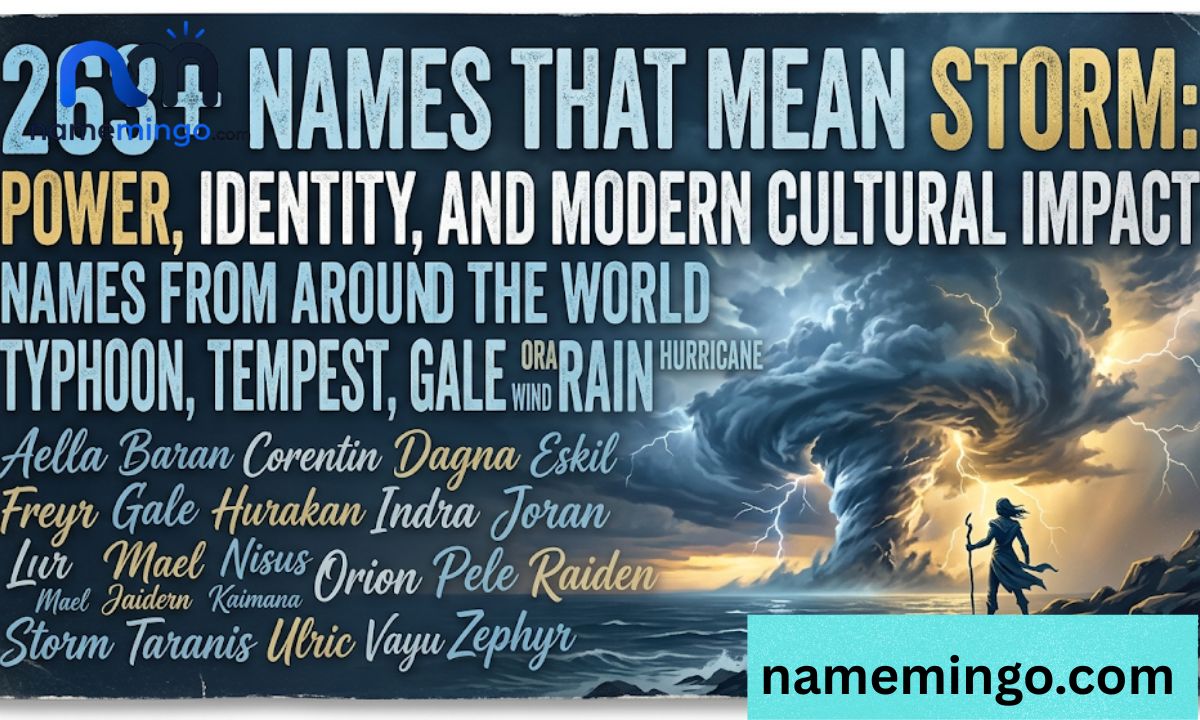
Storms have always fascinated people. They are wild, loud, and full of energy. It makes sense that many names carry this same power.
Across cultures, storm names show strength and courage. Parents often choose them to inspire boldness. Each name tells a story of nature’s raw force.
Today, these names shape identity in new ways. They appear in books, films, and social media. Their modern impact proves storms still stir our imagination.
Top 5 Trending Storm-Inspired Picks (2026)

These are the names climbing fastest in popularity charts and parenting forums right now a mix of classic punch and modern softness.
- Storm – Still the most direct and recognizable storm name, and it hasn’t lost its edge.
- Skyler – A gentle nod to open skies before the clouds roll in, popular for any gender.
- Raiden – Rooted in the Japanese god of thunder and lightning, now a favorite in gaming and naming circles alike.
- Tempest – Once reserved for literature, now trending as a bold choice for girls.
- Zephyr – The Greek god of the west wind, loved for its airy, gender-neutral sound.
Why Storm Names Are Psychologically Powerful
There’s research-backed psychology behind why names like these stick in people’s minds. Sounds associated with thunder, wind, and lightning often carry hard consonants and sharp vowels and our brains tend to read those sounds as “strong” or “fast,” almost instinctively.
Storm names also tap into something deeper: the idea of transformation. A storm changes the landscape, clears the air, and leaves something new behind. Giving someone (or something) a storm name can feel like an invitation to that same kind of renewal power with purpose, not just power for its own sake.
There’s also a contrast effect at play. Storm names sit right at the edge between chaos and control, danger and beauty. That tension is part of what makes them memorable they’re never boring, and they rarely fade into the background.
Classic Names Rooted in Storm and Thunder Mythology
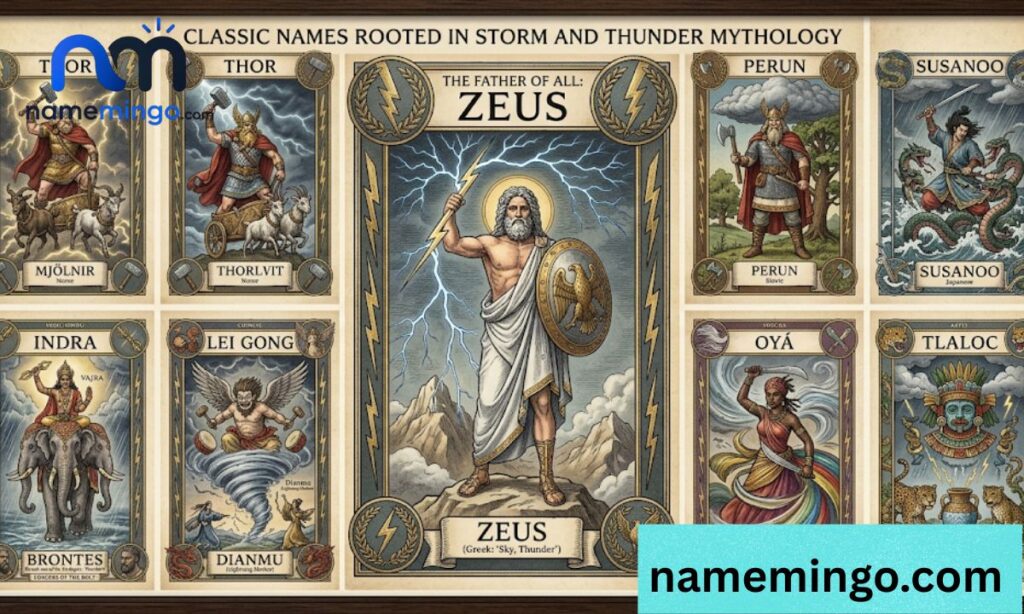
Long before “storm” became a trendy baby name category, ancient cultures were naming their most powerful deities after exactly this kind of force. These names carry centuries of weight.
- Thor – Norse god of thunder, strength, and protection.
- Indra – Hindu king of the storm gods, wielder of thunderbolts.
- Zeus – Greek ruler of the sky, known for commanding thunder and lightning.
- Susanoo – Japanese god of storms and the sea.
- Taranis – Celtic god of thunder, often depicted with a wheel symbol.
- Perun – Slavic god of thunder, lightning, and oak trees.
- Chaac – Mayan god of rain, storms, and agriculture.
- Tlaloc – Aztec deity associated with rain, lightning, and fertility.
- Raijin – Japanese god of thunder, often paired with the wind god Fujin.
- Adad – Mesopotamian storm god, associated with rain and floods.
- Hadad – Canaanite deity of storms and rain.
- Donar – Old Germanic name for the thunder god, a relative of Thor.
- Jupiter – Roman king of the gods, ruler of sky and storm.
- Marduk – Babylonian deity linked to storms and the creation of order from chaos.
- Oya – Yoruba goddess of storms, wind, and dramatic change.
- Shango – Yoruba god of thunder, fire, and justice.
- Ukko – Finnish god of the sky, weather, and thunder.
- Mixcoatl – Aztec deity associated with storms and the Milky Way.
Modern English Storm Names with Bold Appeal
These names take the raw vocabulary of weather and turn it into something that feels fresh, modern, and ready for everyday use.
- Stormie – A softened, friendly take on “Storm.”
- Whirlwind – Bold and unapologetic, full of motion.
- Gale – A strong wind name with a classic, timeless feel.
- Skye – Light, airy, and tied to open spaces above the clouds.
- Sky – Simple, modern, and endlessly versatile.
- Rain – Soft on the surface, but carries quiet emotional depth.
- Raine – A stylized spelling that adds a little extra polish.
- Misty – Gentle and atmospheric, evoking fog after a storm.
- Cloud – Minimalist and dreamy, increasingly popular for pets and kids alike.
- Thunder – Loud, confident, and impossible to ignore.
- Lightning – Fast, electric, and full of energy.
- Blizzard – Intense and wintry, with a strong visual presence.
- Breeze – Light and easygoing, the calmer cousin of “Gale.”
- Squall – A sudden burst of wind and rain, sharp and quick.
- Maelstrom – Chaotic and powerful, often used for dramatic effect.
- Torrent – Suggests a rush of unstoppable energy.
- Cyclone – Strong, swirling, and instantly recognizable.
- Drizzle – A soft, understated option with quiet charm.
Feminine Storm Names with Grace and Strength
These names blend the raw power of a storm with softness and elegance strength that doesn’t have to shout.
- Tempestia – An elegant, flowing take on “Tempest.”
- Skyla – Light, airy, and storm-touched.
- Raina – Suggests rain and quiet regal strength.
- Zephyrine – A feminine form of Zephyr, the west wind.
- Stormessa – A softened, melodic version of “Storm.”
- Electra – Greek-rooted, meaning “shining” or “amber,” often tied to lightning.
- Brontë – Greek-rooted, literally meaning “thunder.”
- Anila – Sanskrit-rooted, connected to the wind.
- Maren – Often interpreted as “storm of the sea.”
- Indira – A name carrying echoes of the storm deity Indra.
- Mistral – Named after the powerful, cold wind of southern France.
- Niamh – Irish, associated with brightness and radiance, like lightning.
- Vela – Latin-rooted, tied to sails catching the wind.
- Coralei – A modern coinage with a sea-storm feel.
- Auria – Suggests golden light breaking through storm clouds.
- Squalena – A bold, invented name built from “squall.”
- Stellora – Combines “storm” energy with starlight.
- Quennelle – A graceful, invented name meaning “storm queen.”
Also Read This: 356+ Names That Mean Trickster, Mischievous & Clever Names 2026
Masculine Storm Names That Signal Strength
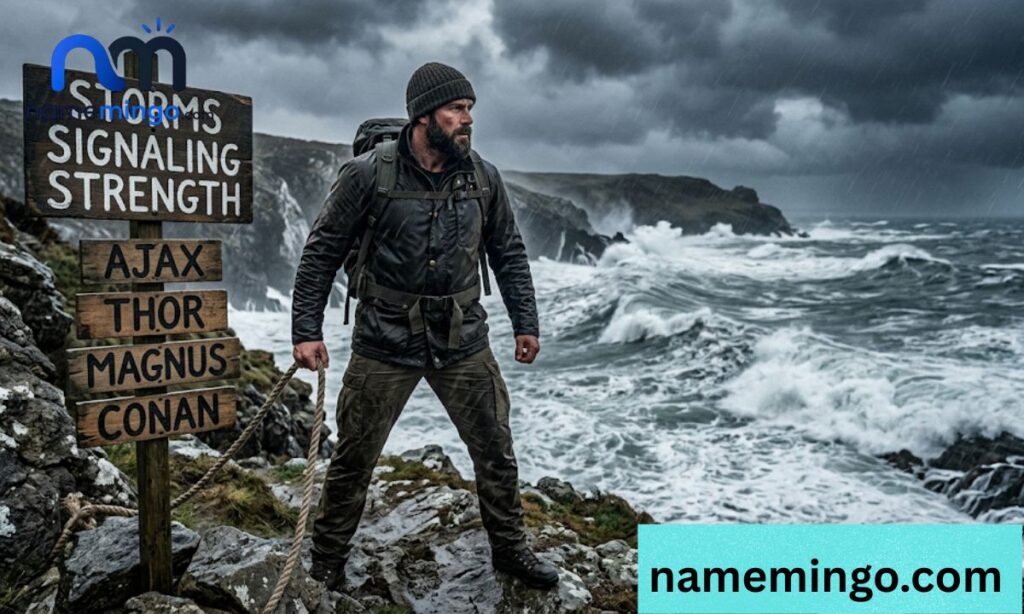
For names that feel grounded, powerful, and a little untamed, this list leans into mythology, language roots, and bold modern coinages.
- Thorin – Echoes Thor and carries thunderous strength.
- Ragnar – A Norse name tied to legendary storm-tested warriors.
- Zephyros – Greek god of the west wind.
- Stormrick – A modern blend of “storm” and strength.
- Boran – A Central Asian word meaning “storm.”
- Donovan – Irish, meaning “dark warrior,” often paired with stormy imagery.
- Tor – A short, punchy nod to thunder.
- Adar – Hebrew-rooted, associated with might and intensity.
- Indrajit – Sanskrit, meaning “conqueror of Indra,” a name from epic storm mythology.
- Stormcaller – A title-style name with fantasy roots.
- Caspian – Tied to the famously stormy Caspian Sea.
- Tempes – A masculine variant of “Tempest.”
- Stormeon – A modern coined name with a futuristic edge.
- Brontus – Greek-rooted, meaning “thunder.”
- Fulgur – Latin for “lightning.”
- Ouranos – Greek primordial sky god, father of storms.
- Set – Egyptian deity associated with storms and chaos.
- Marek – Slavic-rooted, often linked to warrior energy and storms.
Gender-Neutral Storm Names Reflecting 2026 Identity Trends
Naming trends in 2026 are leaning hard into nature-inspired, gender-neutral choices and storm energy fits right in.
- Wren – Small, sharp, and full of quiet energy.
- River – Constant motion, echoing storm runoff and flow.
- Wilder – Untamed and bold, popular across genders.
- Cypress – Earthy and grounded, often paired with storm-weathered landscapes.
- Briar – Sharp and natural, with a wild edge.
- Quill – Light, sharp, and quick like a lightning strike.
- Onyx – Dark and striking, evoking storm clouds.
- Aspen – Light and trembling, like leaves before a storm.
- Cove – Shelter from a storm, calm within chaos.
- Phoenix – Rising from destruction, much like land after a storm.
- Indigo – The deep blue-black of storm skies.
- Reign – A homophone of “rain,” doubling as a statement of power.
- Sterling – Sharp and metallic, like the flash of lightning.
- Marlowe – Smooth yet strong, with literary roots.
- Sailor – Tied to those who navigate storms at sea.
- Lux – Latin for “light,” echoing a lightning flash.
- Wyn – Welsh-rooted, meaning “fair” or “blessed,” often paired with wind names.
- Sage – Calm wisdom that follows the chaos of a storm.
International Names That Mean Storm, Thunder, or Rain
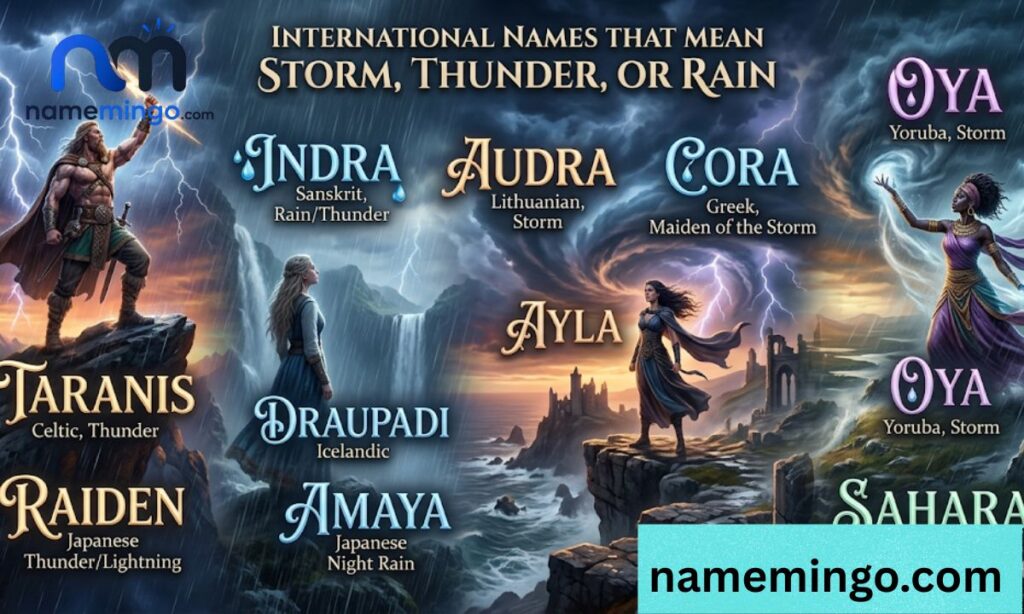
Across the world, the words for “storm,” “thunder,” “wind,” and “rain” have become beautiful, naming-worthy sounds in their own right.
- Anil – Sanskrit for “wind.”
- Pavan – Hindi for “breeze.”
- Varsha – Sanskrit/Hindi for “rain.”
- Megha – Sanskrit for “cloud.”
- Kaze – Japanese for “wind.”
- Ame – Japanese for “rain.”
- Taran – Welsh for “thunder.”
- Glaw – Welsh for “rain.”
- Gwynt – Welsh for “wind.”
- Pluie – French for “rain.”
- Foudre – French for “lightning.”
- Tufan – A Persian, Turkish, and Urdu word meaning “storm” or “flood.”
- Sa’iqa – Arabic for “thunderbolt.”
- Ra’d – Arabic for “thunder.”
- Matar – Arabic for “rain.”
- Anan – Hebrew for “cloud.”
- Akua – An Akan (Ghanaian) name often tied to strength and resilience.
- Mvua – Swahili for “rain.”
- Upepo – Swahili for “wind.”
- Myrsky – Finnish for “storm.”
- Sade – Finnish for “rain,” also a recognized given name.
- Vihar – Hungarian for “storm.”
- Furtuna – Romanian for “storm.”
- Ploaie – Romanian for “rain.”
- Zarnitsa – A Russian word for sheet or summer lightning.
Rare and Uncommon Storm Names for Distinct Identity
For people who want something that almost no one else will have, these names lean into rare meteorological terms and bold inventions.
- Fulmina – Latin-rooted, evoking lightning strikes.
- Brontide – A real meteorological term for distant, low thunder sounds.
- Squallow – A modern coined name blending “squall” with softness.
- Nimbula – Inspired by “nimbus,” the storm cloud.
- Cumulo – Drawn from “cumulonimbus,” the storm cloud formation.
- Petrichor – The scientific term for the scent of rain on dry earth.
- Virga – A meteorological term for rain that evaporates before reaching the ground.
- Derecho – A Spanish-rooted term for a powerful straight-line windstorm.
- Haboob – Arabic-rooted term for an intense dust storm.
- Voltspire – A modern coinage suggesting a tower of lightning.
- Stormbreaker – A bold, title-like name with fantasy appeal.
- Thundra – A blend of “thunder” and “tundra,” icy and electric.
- Galeforce – Direct and powerful, built from “gale.”
- Tempestra – A stylized, feminine-leaning variant of “Tempest.”
- Cyclonia – A dramatic expansion of “cyclone.”
- Maelstra – A softened form of “maelstrom.”
- Voltessa – Electric and modern, built from “volt.”
- Skyrend – Suggests something powerful enough to split the sky.
- Fulgora – Latin-rooted, tied to flashes of lightning.
- Stormwynn – Combines “storm” with an Old English-style ending.
- Rainex – A sleek, modern take on “rain.”
- Thunderhollow – Evocative and place-like, with a fantasy feel.
- Cloudrift – Suggests clouds drifting after a storm passes.
Names That Mean Storm, Thunder, Lightning, or Rain
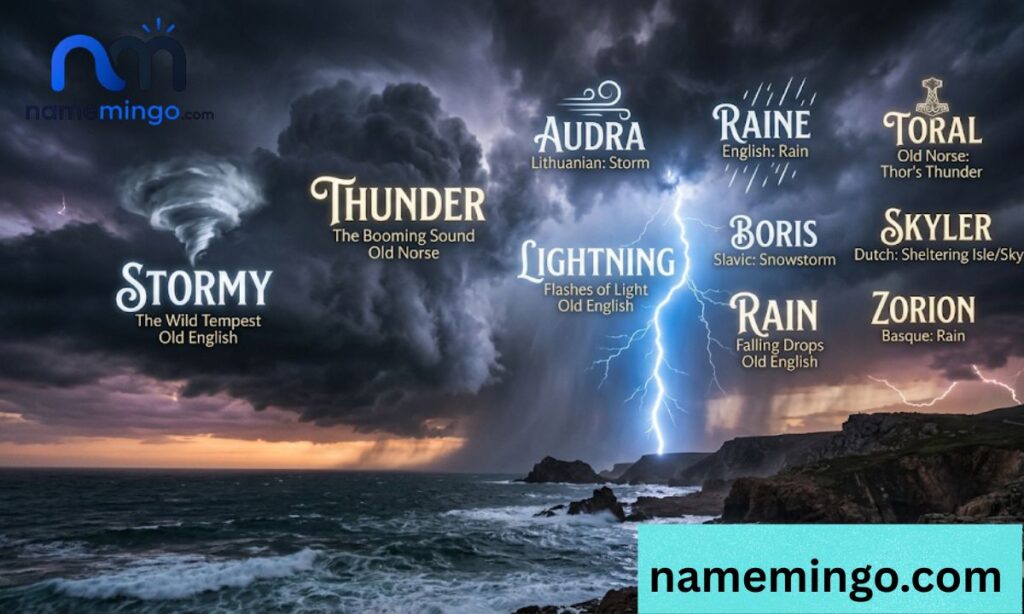
This is the heart of the list a wide-ranging collection of names tied directly to storms, thunder, lightning, wind, and rain from mythologies and languages around the globe.
- Anemoi – The collective Greek name for the wind gods.
- Notus – Greek god of the south wind.
- Boreas – Greek god of the north wind.
- Eurus – Greek god of the east wind.
- Stribog – Slavic god of wind and storms.
- Fujin – Japanese god of wind.
- Enlil – Mesopotamian god of wind and storms.
- Anhur – Egyptian deity associated with storms and war.
- Inazuma – Japanese word for “lightning.”
- Kaminari – Japanese word for “thunder.”
- Arashi – Japanese word for “storm.”
- Leiting – Chinese term for “thunder.”
- Feng – Chinese word for “wind.”
- Yu – Chinese word for “rain.”
- Ua – Hawaiian word for “rain.”
- Makani – Hawaiian word for “wind.”
- Ikaika – Hawaiian for “strong,” often linked to storm power.
- Wakinyan – Lakota for “thunder being.”
- Heyoka – Lakota sacred figure associated with thunder and storms.
- Animikii – Ojibwe word for “thunder.”
- Mamaragan – An Aboriginal Australian lightning spirit.
- Namarrgon – Known in Aboriginal Australian tradition as the “lightning man.”
- Tawhirimatea – Maori god of weather and storms.
- Ranginui – Maori sky father, linked to storms.
- Quetzalcoatl – Aztec deity sometimes associated with wind and storms.
- Huracan – Mayan god of wind, storm, and fire root of the word “hurricane.”
- Camazotz – A Mayan figure associated with night and storms.
- Apalala – A serpent deity from Buddhist tradition linked to storms and rivers.
- Pajonn – Sámi god of thunder.
- Ahti – Finnish deity associated with water and storms.
- Veles – Slavic god linked to storms and water.
- Dazbog – Slavic deity associated with the sun and weather.
- Illapa – Incan god of thunder and lightning.
- Catequil – Incan god of thunder, lightning, and daylight.
- Chasca – Incan figure associated with storm clouds and stars.
- Setanta – The Celtic birth name of the legendary hero Cú Chulainn, tied to storm-warrior myths.
- Manannán – Celtic sea god, associated with storms at sea.
- Lir – Celtic sea deity, linked to tides and storms.
- Marut – Sanskrit term for the storm gods who accompany Indra.
- Catatumbo – Named after the famous “everlasting storm” of Lake Maracaibo, Venezuela.
Gender Neutral Names That Mean Storm
A focused set of gender-neutral picks, leaning more on meaning and sound than on trend.
- Aria – Means “air,” evoking the breath before a storm.
- Avalon – A mist-shrouded island from legend.
- Maelle – French-rooted, linked to hail and stormy weather.
- Cirrus – A wispy, high-altitude storm cloud.
- Nimbi – The plural of “nimbus,” meaning storm clouds.
- Halcyon – Refers to the calm that follows a storm.
- Eddy – A swirling current of wind or water.
- Surge – The powerful rise of a storm tide.
- Gust – A sudden, sharp rush of wind.
- Cloudin – A soft modern coinage built from “cloud.”
- Stormlyn – A flowing, modern storm-based name.
- Windell – Evokes the steady rush of wind.
- Brisk – Sharp and energetic, like the edge of a storm.
- Wisp – Light and fleeting, like mist after rain.
- Echo – The rumble that lingers after thunder.
- Misha – An international name often softly linked to misty weather.
Fantasy Names That Mean Storm
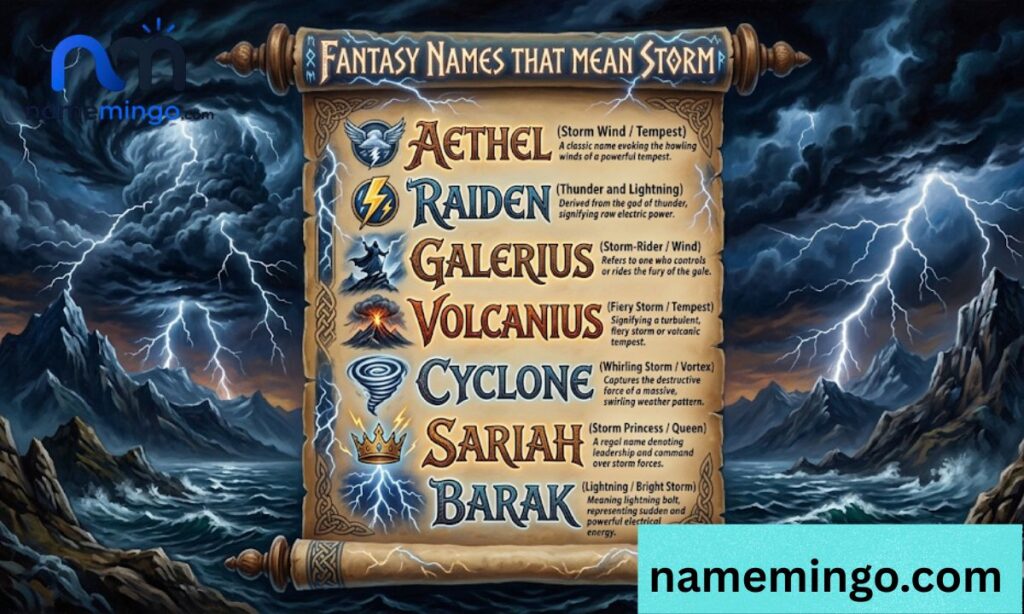
Built for world-building, gaming, and fiction, these names lean into invented, dramatic sounds with storm energy baked in.
- Stormrender – Suggests someone who can tear apart a storm.
- Thalindra – A flowing, elvish-style storm name.
- Zephyriel – Combines “Zephyr” with an angelic ending.
- Kaelstorm – A modern fantasy blend of name and weather.
- Vorthane – Sharp and commanding, with a draconic feel.
- Stormshade – Suggests darkness carried within a storm.
- Aerendyl – Airy and elegant, tied to wind and sky.
- Thundrix – Electric and punchy, with a sci-fi edge.
- Nimbusara – Combines “nimbus” with a softer feminine ending.
- Stormwind – Direct, bold, and instantly evocative.
- Skyveil – Suggests a veil of clouds covering the sky.
- Tempestrune – Combines “Tempest” with ancient, rune-like mystery.
- Voltheris – Electric and regal, suited for a powerful character.
- Galewyn – Combines “gale” with a softer, wind-touched ending.
- Drakthorne – Fierce and storm-touched, with a dragon-like edge.
- Mistveil – Suggests mystery hidden behind storm mist.
Boy Names That Mean Storm
A dedicated list for parents and creators looking for storm-rooted names with a masculine edge.
- Caelum – Latin for “sky.”
- Tempesto – A bold, masculine variant of “Tempest.”
- Stormand – A modern name built directly from “storm.”
- Kael – Sharp and short, often paired with storm themes.
- Brand – Old English/Norse roots tied to fire and intensity.
- Roric – A storm-warrior coinage with Norse-style sound.
- Vortan – Suggests a vortex of wind and power.
- Skylan – A modern, sky-rooted name with a strong ending.
- Dax – Short, punchy, and energetic.
- Kellan – Strong and grounded, often paired with storm imagery.
- Thane – A title-based name suggesting command and strength.
- Brecken – Earthy and bold, with a storm-weathered feel.
- Halden – Strong and Nordic-sounding, fitting for storm themes.
- Stormund – A heavier, Germanic-style storm name.
- Bryxton – A modern coinage with a sharp, electric sound.
- Wrenfield – Combines a sharp natural element with grounded strength.
Names That Mean Lightning Boy
For names specifically tied to lightning and electric energy.
- Volt – A modern name referencing electric power.
- Levin – An archaic English word meaning “lightning.”
- Blitzen – German-rooted, meaning “lightning” or “shining.”
- Sparks – Playful and energetic, evoking electric flashes.
- Fulgar – Latin-rooted, meaning a flash of lightning.
- Zigfrid – A Norse-Germanic name with a “flash of victory” feel.
- Electron – A sleek, science-inspired modern coinage.
- Flash – Direct, fast, and instantly recognizable.
- Indralight – Combines the storm deity Indra with “light.”
- Strikeon – A modern coinage suggesting a lightning strike.
- Voltaire – A real surname with an electric, energetic pun.
- Jolt – Short, sharp, and full of sudden energy.
What Are Some Last Names That Mean Storms
Surnames carry storm meanings too often rooted in older European and Asian languages, where weather words became family names over generations.
- Storm – A direct English surname, simple and strong.
- Stormont – A Scottish place-based surname tied to storm imagery.
- Sturm – German for “storm.”
- Donner – German for “thunder.”
- Blitz – German for “lightning.”
- Wind – An English surname tied directly to weather.
- Winter – Evokes storm-heavy seasons.
- Frost – Sharp, cold, and storm-adjacent.
- Gale – A classic English surname meaning “strong wind.”
- Tempest – A historic English surname with dramatic flair.
- Orage – French for “storm.”
- Tonnerre – French for “thunder.”
- Pluvier – French-rooted, connected to rain.
- Tormenta – Spanish and Italian for “storm.”
- Rayo – Spanish for “lightning” or “ray.”
- Burza – Polish and Czech for “storm.”
- Grom – Russian for “thunder.”
- Tempesta – Italian for “storm.”
- Amefuri – A Japanese surname-style name referencing rainfall.
- Vetrov – Russian, meaning “of the wind.”
Storm Names and Personal Branding
Storm names aren’t just for babies and book characters anymore they’re showing up in business names, social media handles, and personal brands too. There’s a reason for that: a storm name instantly signals movement, energy, and confidence, which is exactly what most brands want to project.
Think about how often you see “Volt,” “Tempest,” or “Cyclone” attached to fitness brands, tech startups, or creative studios. These names cut through the noise of generic branding because they carry built-in emotion. People don’t just read them they feel them.
If you’re considering a storm name for a brand or personal identity, the key is matching the type of storm energy to your message. A lightning-based name feels fast and disruptive, while a rain-based name feels calming and renewing. Choosing the right “flavor” of storm matters just as much as choosing the name itself.
The Emotional Symbolism Behind Storm Names
At their core, storm names tap into a universal human experience we’ve all stood at a window watching a storm roll in, feeling that mix of awe, nervousness, and excitement. Names that echo that feeling carry an emotional charge most other categories simply don’t have.
Rain-based names often lean toward renewal, cleansing, and quiet strength think of how the world feels different after rainfall. Thunder and lightning names, on the other hand, tend to symbolize sudden change, announcement, or a moment that can’t be ignored. Wind-based names sit somewhere in between, suggesting movement, freedom, and constant change.
What makes storm names so emotionally resonant is that they hold both sides of a feeling at once danger and beauty, chaos and clarity. That duality is part of why these names rarely feel one-dimensional, no matter who’s wearing them.
Choosing the Right Storm Name for Your Context
Not every storm name fits every situation, and that’s actually a good thing it means there’s room to get specific. For a baby name, softer storm-rooted choices like Raina, Skye, or Wren tend to age gracefully through childhood and adulthood alike.
For fantasy writing or gaming, bolder and more invented names Stormrender, Voltheris, Thalindra give characters an immediate sense of power without needing a long backstory. For pets, shorter and punchier options like Gale, Blitz, or Squall tend to work best, since they’re easy to call out and remember.
If you’re naming a brand or project, think about tone first. A wellness brand might lean toward Rain or Mistral, while a tech or sports brand might lean toward Volt or Cyclone. The right storm name almost always comes down to matching the feeling you want people to have, not just the literal meaning.
Closing Reflection: The Beauty of Power in a Name
There’s a reason storm names have survived from ancient mythology all the way into 2026 naming trends they tap into something that never really goes out of style. Power, change, beauty, and a little bit of unpredictability are things people have always wanted to carry with them, whether in a name, a brand, or a character.
What’s striking is how flexible these names are. The same root idea a storm can sound soft and graceful (Raina, Mistral) or fierce and commanding (Thorin, Stormbreaker), depending on the form it takes. That range is rare in naming categories, and it’s part of what keeps this list growing every year.
In the end, a storm name is really a small reminder that strength doesn’t have to be loud all the time, and softness doesn’t mean weak. Whatever name you choose from this list, it carries a piece of that same energy something that moves, something that changes the air in the room, and something that’s impossible to ignore.
Frequently Asked Questions
What is a good gender-neutral name that means storm?
Names like Storm, Sky, Rain, Wren, and Aria all work well across genders and carry storm-related meanings without leaning too masculine or feminine.
What names mean lightning specifically, rather than just storm?
Names such as Raiden, Volt, Levin, Blitzen, and Fulgar are tied directly to lightning and electric energy, rather than storms in general.
Are storm names good choices for baby names?
Yes many storm names, especially softer ones like Raina, Skye, Wren, and Misty, work well as everyday names and age naturally from childhood into adulthood.
What’s the difference between a storm name and a thunder name?
Storm names often relate to overall weather power and change (Tempest, Cyclone), while thunder names specifically reference sound and impact (Brontë, Donner, Grom).
Can storm names be used for pets?
Definitely. Short, punchy storm names like Gale, Blitz, Squall, and Cloud are especially popular for pets because they’re easy to say and call out.
Are there storm names rooted in non-Western cultures?
Yes names like Oya (Yoruba), Susanoo (Japanese), Tlaloc (Aztec), and Wakinyan (Lakota) all come from rich storm-related mythologies outside Western traditions.
Why are storm names trending in 2026?
Storm names align with broader naming trends toward nature-inspired, gender-neutral, and emotionally evocative names and they offer a sense of strength and individuality that feels current.

Daniel is the creator of Namemingo.com, a writer guided by curiosity and a deep passion for the stories behind names. With a background in linguistics, cultural history, and name etymology, Daniel transforms complex research into clear, engaging, and easy-to-understand content. His writing invites readers to explore the rich origins, spiritual meanings, and cultural significance hidden within everyday names.