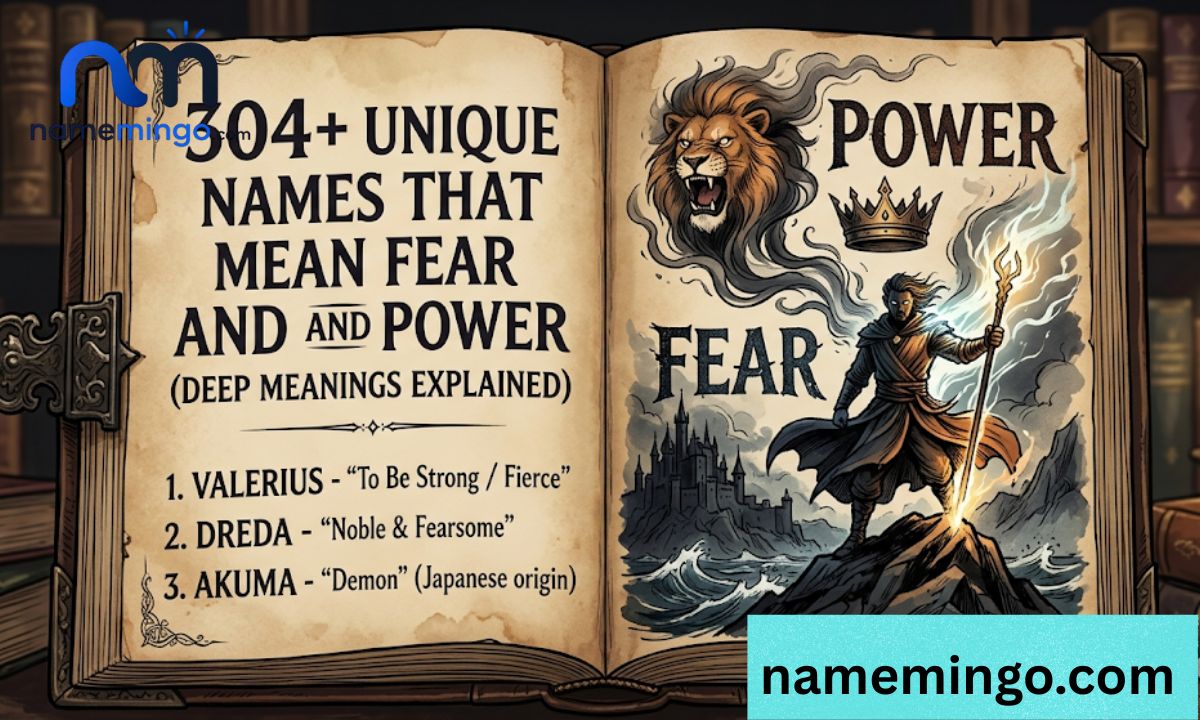
Names hold a distinct kind of gravity. For generations, we have chosen titles that evoke warmth, light, and peace, but there is an undeniable, magnetic pull toward names that command a room through sheer presence. To choose a name rooted in fear and power is not about invoking malice; it is about acknowledging the raw, elemental forces of the world. These names carry a weight that demands respect, blending an aura of formidable strength with an air of mysterious intrigue.
When you look closely at history and mythology, fear and power are often two sides of the same coin. A name that inspires dread in an adversary often brings a sense of absolute protection and authority to the person who bears it. Writers, world-builders, and parents looking for an unforgettable identity are increasingly turning toward these deeper, shadow-infused etymologies. They offer a striking alternative to conventional, predictable naming trends by embracing the fierce complexity of human nature.
In modern storytelling and identity curation, a name that carries undertones of anxiety, power, or awe serves as an instant statement. It suggests resilience, survival, and an unbreakable spirit that has stared into the dark and claimed it as an ally. As you explore this carefully curated collection, you will find names that bridge ancient folklore with contemporary edge, each carrying a legacy designed to leave a lasting, powerful impression on anyone who hears it.
Names That Mean Dread
- Deimos: Greek origin meaning “terror” or “dread,” famously known as the personification of terror in mythology.
- Phobos: Greek origin meaning “fear” or “panic,” the brother of Deimos.
- Egregre: West African origin translating roughly to a presence that causes sudden alarm or dread.
- Grimm: Old High German name meaning “stern,” “severe,” or “full of dread.”
- Atrax: Latin roots associated with dark, dreadful, or unyielding forces.
- Metus: A direct Latin term signifying fear, dread, and awe.
- Balor: Irish mythological name of a giant whose gaze could strike dread and destruction.
- Vritra: Sanskrit origin meaning “the enveloper” or “restrainer,” a dragon representing cosmic dread.
- Gorgon: Greek origin meaning “terrible” or “dreadful,” evoking the mythical creature’s gaze.
- Bhaya: Sanskrit name directly translating to “fear” or “the sensation of dread.”
- Morana: Slavic origin referring to winter, death, and the chilling dread of nature.
- Pavor: Latin personification of panic and overwhelming dread.
- Taranis: Celtic origin meaning “thunderer,” a deity associated with atmospheric dread.
- Skadi: Norse goddess of winter and mountains, a name carrying the cold dread of the wilderness.
- Keres: Ancient Greek spirits of violent death and dark dread.
- Orcus: Roman mythological name associated with the underworld and punitive dread.
- Draugr: Old Norse name referring to the restless, dread-inducing undead spirits.
- Brimstone: English origin evoking sulfur, fire, and biblical dread.
- Onyx: Greek origin meaning “claw,” carrying a sharp, dark, and dreadful aesthetic.
- Kala: Sanskrit name meaning “time” or “death,” representing the ultimate dread of mortality.
Last Names That Mean Fear
- Angst: German surname directly translating to “anxiety” or “fear.”
- Grieves: English origin denoting a stern governor or one who brings somber, fearful news.
- Craven: English origin historically used to denote fear or cowardice, now used for its sharp, gothic ring.
- Kruger: Germanic origin, often associated with harshness or a terrifying demeanor in folklore.
- Bane: Old English surname meaning “destroyer” or “source of fear.”
- Loomis: Scottish origin suggesting a brooding, low-hanging mist or a lingering presence.
- Stoker: Irish/English surname meaning “furnace tender,” heavily associated with literary terror.
- Malice: Old French surname indicating ill will or a fearful intent.
- Gore: Old English topographic name that has evolved to carry dark, visceral undertones.
- Riddle: English origin evoking a mysterious, unpredictable, and frightening nature.
- Grave: English and northern European name relating to a burial site or an intensely serious disposition.
- Blackwood: Scottish/English origin denoting a dark, dense forest that inspires fear.
- Severin: Latin origin meaning “harsh,” “severe,” or “strict.”
- Vane: English surname carrying a sharp, unpredictable, and imposing quality.
- Morbidelli: Italian surname derived from roots suggesting darkness, softness, or frailty that turns unsettling.
- Nightshade: English botanical surname representing a lethal, fearful plant.
- Radcliffe: English origin meaning “red cliff,” often associated with historic, imposing strongholds.
- Cullen: Irish surname meaning “holly,” but popularized as a name carrying a cold, powerful mystique.
- Grimshaw: English origin meaning “dark woods,” an environment of natural fear.
- Barrow: Anglo-Saxon origin referring to an ancient burial mound filled with spirits.
Names That Mean Fear of God
- Timotheus: Greek origin meaning “honoring God” or “in fear and awe of God.”
- Yare: Hebrew roots signifying a deep, reverent fear and awe of the Divine.
- Awe: Middle English word used as a name to represent overwhelming respect and fear of holy power.
- Feodor: Russian variant of Theodore, historically associated with a deep, trembling reverence for heaven.
- Yoram: Hebrew origin meaning “the Lord is exalted,” implying a fearful respect for His height.
- Reverence: English virtue name capturing the trembling awe before the divine.
- Taqi: Arabic origin meaning “god-fearing,” “devout,” or “pious.”
- Timon: Greek origin meaning “respect” or “the fear that brings honor.”
- Ilahi: Arabic origin referring to divine presence and the humbling fear it commands.
- Ondrej: Slavic variant implying a disciplined, God-fearing strength.
- Zayd: Arabic variant sometimes used contextually to describe one who grows in spiritual fear and discipline.
- Obadiah: Hebrew origin meaning “servant of Yahweh,” implying absolute, fearful submission to God.
- Reverand: English occupational name that evolved to signify holy fear and administration.
- Godfear: Archaic English descriptive name for a deeply pious individual.
- Hanoch: Hebrew origin meaning “dedicated” or “initiated into divine fear.”
- Muttaqi: Arabic origin meaning “one who fears Allah” and remains righteous.
- Amos: Hebrew origin meaning “burdened by God,” signifying the heavy weight of divine fear.
- Malachi: Hebrew origin meaning “my messenger,” carrying the terrifying weight of a divine word.
- Josiah: Hebrew origin meaning “the Lord heals,” but rooted in a history of deep, reformative fear of God.
- Elijah: Hebrew origin meaning “My God is Yahweh,” an declaration of fierce spiritual allegiance.
What’s the Name That Means Fear of Your Past
- Anamnesis: Greek origin referring to the intense, sometimes terrifying recollection of past lives or memories.
- Atavism: Latin root name signifying the sudden, fearful resurgence of ancestral traits or past sins.
- Lethe: Greek origin meaning “forgetfulness,” chosen to represent the active escape from a terrifying past.
- Kalyana: Sanskrit roots that can be used contextually to mean shedding the heavy karma of yesterday.
- Nostos: Greek origin meaning “homecoming,” which in a darker context represents the fear of returning to where you began.
- Remissa: Latin root implying a constant, anxious look back at what has been done.
- Pratita: Sanskrit origin relating to past experiences that continue to haunt or inform the present.
- Yester: Middle English poetic name representing the lingering, shadowy weight of yesterday.
- Retro: Latin prefix used as a modern name to symbolize being pulled back into old terrors.
- Paleo: Greek origin meaning “ancient,” evoking the deep-seated dread of primeval origins.
- Chrono: Greek origin meaning “time,” representing the unstoppable, fearful march of one’s history.
- Vergangenheit: German word for “the past,” used in avant-garde contexts to mean the weight of history.
- Echo: Greek origin representing a voice from the past that refuses to fade, causing psychological fear.
- Mneme: Greek titaness of memory, representing the overwhelming, fearful power of remembrance.
- Ghost: English origin symbolizing the literal or metaphorical hauntings of past actions.
- Shadow: Middle English origin representing the past that follows you wherever you go.
- Relic: Latin origin meaning “remains,” symbolizing the fearful pieces of a past life that stay behind.
- Aethel: Old English root used to signify ancestral lineage that carries a dark, inescapable burden.
- Karmic: Sanskrit derivative representing the inescapable, fearful cycle of past actions catching up.
- Obsidio: Latin name meaning “siege,” representing a mind under siege by its own history.
Female Names That Mean Fear
- Terrora: A stylized, modern feminine adaptation of the word terror.
- Valerie: Latin origin meaning “strength” or “valor,” specifically the power shown in the face of fear.
- Phaedra: Greek origin meaning “bright,” but historically tied to dark tragedies of fear and obsession.
- Fria: Germanic/Nordic roots suggesting a chilling breeze or sudden, sharp fear.
- Bhavya: Sanskrit origin meaning “grand” or “splendid,” describing a presence that strikes a fearful awe.
- Mara: Hebrew/Slavic origin meaning “bitter” or a night demon that brings suffocating fear.
- Kali: Sanskrit origin meaning “the black one,” the terrifying Hindu goddess of time, destruction, and power.
- Empusa: Greek mythological name for a shape-shifting female entity that terrorized travelers.
- Lamia: Greek origin representing a mythical queen whose name struck fear into children and adults alike.
- Hecate: Greek goddess of magic, witchcraft, the night, and the terrifying unseen world.
- Morrigan: Celtic origin meaning “phantom queen,” a goddess of war who took the shape of a crow to strike fear.
- Eris: Greek goddess of discord and strife, whose presence brought panic and fear to armies.
- Bellona: Roman goddess of war, whose name evokes the visceral terror of battle.
- Alecto: Greek origin meaning “unceasing anger,” one of the Furies who hunted the fearful.
- Tisiphone: Greek origin meaning “avenger of murder,” an imposing and terrifying figure.
- Megaera: Greek origin meaning “the jealous one,” a Fury whose name caused immediate dread.
- Lilith: Hebrew origin meaning “night monster,” a legendary figure of nocturnal power and fear.
- Gorgonia: A feminine name derived from the terrifying, stone-turning Gorgons of myth.
- Chimera: Greek origin representing a fire-breathing, terrifying composite monster.
- Pandora: Greek origin meaning “all-gifted,” but famously tied to the release of world-ending terrors.
Top 5 Trending Picks in 2026
| Name | Origin | Primary Meaning | Why It’s Trending in 2026 |
| Valko | Slavic | “Wolf-power / Shadow-fear” | High demand in fantasy fiction and digital gaming aliases. |
| Nycto | Greek | “The dark night that inspires fear” | Embraced by modern minimalist and gothic subcultures. |
| Azael | Hebrew | “Whom God strengthens against terror” | Rising popularity due to its sharp phonetic sound and mythic roots. |
| Zorina | Slavic | “Golden dawn / Blinding power” | Chosen for characters who turn inner anxiety into absolute dominance. |
| ** Obsidian ** | English | “Volcanic dark glass” | A top pick for its sleek, dark, and imposing architectural feel. |
Why Fear Based Names Are Rising in Modern Identity
In an era dominated by oversaturated, overly cheerful digital personas, there is a profound cultural shift toward authenticity, edge, and subversion. Modern identity creators, writers, and digital publication managers are realizing that names carrying a hint of fear or power stick in the human mind far longer than soft, traditional names. These titles offer a psychological shield; they project an image of someone who cannot be easily shaken, broken, or forgotten, making them incredibly popular for usernames, modern creative writing, and standout character development.
Subtle Names That Carry Fear Through Meaning
- Brennan: Irish origin meaning “sorrow” or “dark drop,” implying a quiet, ominous presence.
- Dolores: Spanish origin meaning “sorrow” or “pains,” evoking an empathetic yet fearful depth.
- Gideon: Hebrew origin meaning “feller” or “hewer,” a subtle name for a terrifying destroyer.
- Malik: Arabic origin meaning “king” or “master,” carrying the quiet, absolute fear of total authority.
- Tamerlane: Tatar origin meaning “iron,” suggesting a cold, unyielding, and frightening resolve.
- Sullen: English origin describing a dark, gloomy, and unpredictable temper.
- Vesper: Latin origin meaning “evening star,” carrying the subtle, chilling arrival of the dark.
- Doyle: Irish origin meaning “dark stranger,” a name built on the fear of the unknown.
- Brutus: Latin origin meaning “heavy” or “dull,” representing brute, terrifying force.
- Cassius: Latin origin meaning “hollow,” evoking a chilling lack of emotion or fear.
- Damien: Greek origin meaning “to tame” or “subdue,” with heavy cultural ties to ominous forces.
- Draco: Latin origin meaning “dragon,” a subtle nod to a terrifying mythological beast.
- Giles: Greek origin meaning “kid” or “young goat,” but historically associated with a shield that strikes fear.
- Lazarus: Hebrew origin meaning “God has helped,” but carrying the eerie, powerful aura of rising from the grave.
- Marko: Latin origin derived from Mars, the god of war and systemic battlefield terror.
- Silas: Latin origin meaning “forest” or “woods,” hinting at the quiet, ancient fear of deep wild spaces.
- Tristan: Celtic origin meaning “sorrowful” or “tumultuous,” carrying an unsettling, heavy energy.
- Victor: Latin origin meaning “conqueror,” a title that demands a subjugated, fearful populace.
- Zane: Hebrew origin variation meaning “God’s gracious gift,” but tonally used today for sharp, formidable characters.
- Bram: Hebrew/Dutch short form meaning “father of multitudes,” but immortalized through gothic literary associations.
Names That Mean Anxiety Girl
- Tremella: Latin-inspired name evoking the physical act of trembling or shaking with anxiety.
- Angstia: A modern creative variation of the word angst, tailored for an anxious female persona.
- Solana: Spanish origin meaning “sunshine,” used ironically for characters hiding deep, burning internal anxiety.
- Kampa: Sanskrit origin meaning “trembling,” “shaking,” or “quivering with fear.”
- Worry: English virtue name turned on its head to represent modern existential anxiety.
- Vesta: Roman goddess of the hearth, carrying the anxious, heavy responsibility of keeping the eternal fire burning.
- Anxila: A modern, sleek fictional name crafted directly from the phonetic roots of anxiety.
- Flutter: English origin describing the fast, nervous heartbeat associated with sudden panic.
- Care: Old English origin meaning “anxiety,” “grief,” or “heavy sorrowful concern.”
- Martha: Hebrew origin meaning “the lady,” but biblically famous for being “anxious and troubled about many things.”
- Tressa: Cornish origin meaning “third,” but phonetically reminiscent of tension and stress.
- Hester: Persian/Greek origin meaning “star,” carrying a cold, isolated, and anxious brilliance.
- Una: Irish origin meaning “lamb,” representing the vulnerable, anxious nature of a gentle creature.
- Zelda: Germanic origin meaning “dark battle,” representing a girl locked in a quiet war with her thoughts.
- Sigh: English vocabulary name representing the audible release of heavy, anxious tension.
- Nerissa: Greek origin meaning “from the sea,” evoking the restless, anxious waves that never rest.
- Fervor: Latin origin meaning “intense heat” or “passion,” representing a mind burning with anxious thoughts.
- Pensive: French origin meaning “engaged in deep, serious, or anxious thought.”
- Nesta: Welsh origin meaning “pure,” but carrying a sharp, brittle sound that suggests high internal tension.
- Sabine: Latin origin with a tragic history that carries an air of ancient, nervous survival.
Also Read This : 286+ Girl Names That Mean Light: Bright, Radiant, and Meaningful Choices
Names That Mean Fear Girl
- Feura: A creative, human-engineered name combining “fear” with a traditional feminine suffix.
- Timida: Latin root name meaning “fearful,” “shy,” or “one who shrinks away.”
- Bhitika: Sanskrit origin meaning “fear,” “alarm,” or “a sudden panic.”
- Trepidia: Derived from the Latin word trepidatio, meaning a state of fear, alarm, or trembling agitation.
- Afa: Polynesian roots signifying a howling, terrifying storm that brings sudden fear.
- Gidda: Arabic origin meaning “one who commands with a fierce, terrifying energy.”
- Darra: Gaelic origin meaning “oak,” but phonetically used to represent a hard, unyielding, and frightening presence.
- Layla: Arabic origin meaning “night,” the environment that naturally triggers human fear.
- Shudder: English vocabulary name capturing the involuntary physical reaction to pure fear.
- Zora: Slavic origin meaning “dawn,” carrying the blinding, sometimes terrifying light that breaks the dark.
- Nixie: Germanic origin meaning “water sprite,” known for luring travelers to a terrifying aquatic end.
- Koko: Japanese origin meaning “stork,” but in various regional dialects carries folklore ties to nighttime fears.
- Rhea: Greek titaness whose name carries ancient, titanic power capable of crushing adversaries.
- Hervor: Old Norse origin meaning “host-wise” or “frightening warrior woman.”
- Lilithia: An extended, melodic variant of Lilith, amplifying the nighttime terror aspect.
- Tora: Norse origin meaning “Thor’s warrior” or Japanese origin meaning “tiger,” both invoking fierce fear.
- Keres: Greek origin representing the dark female death-spirits who relished the fear of battle.
- Hela: Norse origin referring to the ruler of the underworld, a figure of silent, inescapable fear.
- Chila: Native American roots meaning “screaming eagle,” a sound that strikes fear into prey.
- Zilla: Hebrew origin meaning “shadow” or “shade,” representing a cool, fear-inducing cover.
Girl Names That Mean Fear and Power
- Valeria: Latin origin meaning “to be strong and brave,” fighting through innate fear.
- Athena: Greek goddess of war, wisdom, and strategy; a name that commands terrifying tactical power.
- Audrey: Old English origin meaning “noble strength,” a classic name with a sharp, powerful backbone.
- Bellatrix: Latin origin meaning “female warrior,” heavily associated with dark, terrifying magical power.
- Cyra: Persian origin meaning “like the sun” or “throne,” representing a blinding, absolute authority.
- Dracona: Latin/Greek derivative meaning “she-dragon,” the ultimate symbol of fear and power combined.
- Eldreda: Old English origin meaning “wise counselor” or “terrifyingly ancient power.”
- Freya: Norse goddess of love, beauty, and war; she claims half of the fallen warriors with terrifying power.
- Griselda: Germanic origin meaning “dark battle-maid,” suggesting a grim, unyielding strength.
- Inanna: Ancient Sumerian goddess of love and brutal, terrifying warfare.
- Kendra: Anglo-Saxon origin meaning “knowledgeable leader” or “magical power that intimidates.”
- Maia: Greek origin meaning “mother” or “great one,” representing the overwhelming power of creation.
- Morgana: Welsh origin meaning “sea-circle,” a name loaded with dark, mystical, and powerful undertones.
- Nisha: Sanskrit origin meaning “night,” capturing the vast, silent power and fear of the dark hours.
- Ophira: Hebrew origin meaning “gold,” representing a heavy, blinding wealth that intimidates.
- Regina: Latin origin meaning “queen,” carrying the unassailable power of the royal crown.
- Saskia: Slavic/Dutch origin meaning “protector of mankind” or “the sharp blade that cuts fear.”
- Valentina: Latin origin meaning “strong, vigorous, and healthy,” projecting a powerful physical dominance.
- Xena: Greek origin meaning “guest” or “stranger,” popularized as the ultimate warrior of fear and power.
- Zephyrine: Greek origin meaning “west wind,” evoking a sudden, powerful gale that shakes the earth.
Also Read This :1258+ Unique Arabic Names for Home 2026
Bold Names That Directly Represent Fear
- Dread: Middle English direct noun name representing a state of absolute terror and awe.
- Terror: Latin origin meaning “great fear,” a bold, modern noun choice for a striking persona.
- Panic: Greek origin derived from the god Pan, whose shouts caused overwhelming, irrational fear.
- Fright: Old English origin directly representing a sudden, sharp surge of fear.
- Horror: Latin origin meaning “a shaking or shivering,” the deepest form of visceral fear.
- Alarm: Old French origin meaning “to arms!”, a name signifying sudden, high-stakes fear.
- Tremor: Latin origin meaning “a shaking,” representing the immediate physical consequence of fear.
- Quake: Old English origin meaning “to shake or tremble,” evoking earth-shattering power and fear.
- Shock: Middle Dutch origin meaning “to collide or jolt,” representing a sudden paralyzing fear.
- Gloom: Low German origin representing a dark, heavy, and fear-inducing atmosphere.
- Phantom: Greek origin meaning “an illusion or apparition,” evoking a supernatural, lingering fear.
- Specter: Latin origin meaning “an apparition,” a bold name for a terrifying, ghostly presence.
- Bane: Old English origin representing a source of absolute ruin, death, and persistent fear.
- Scare: Old Norse origin meaning “to frighten or drive away,” a sharp, monosyllabic name.
- Malice: Latin origin representing the conscious desire to cause fear and injury to others.
- Menace: Latin origin meaning “threats,” a bold name for someone who projects constant danger.
- Peril: Latin origin meaning “danger or trial,” representing an environment of constant fear.
- Ruin: Latin origin meaning “falling down,” a name that embodies the terrifying collapse of power.
- Strife: Old French origin meaning “painful conflict,” bringing with it a deep social fear.
- Void: Latin origin meaning “empty,” representing the terrifying, absolute expanse of nothingness.
Gothic and Literary Names with Fearful Undertones
- Edgar: English origin meaning “wealthy spear,” forever tied to the master of gothic psychological horror.
- Roderick: Germanic origin meaning “famous power,” a name steeped in crumbling, gothic mansion lore.
- Lenore: Greek origin meaning “light,” but literary used as the lost, haunting spirit causing deep grief.
- Ligeia: Greek origin meaning “shrill voice,” a classic gothic siren who returns from the dead.
- Heathcliff: English origin meaning “cliff near a heath,” representing a brooding, terrifyingly obsessive character.
- Rochester: English origin meaning “stone fortress,” evoking a dark mansion with a terrifying secret in the attic.
- Ichabod: Hebrew origin meaning “the glory has departed,” famously tied to the legend of Sleepy Hollow.
- Caspar: Persian origin meaning “treasurer,” carrying a pale, ghostly, and artistic literary aura.
- Dracula: Romanian origin meaning “son of the dragon,” the definitive name for sophisticated gothic terror.
- Carmilla: Literary creation representing the sleek, enchanting, and terrifyingly seductive vampire.
- Victor: Latin origin, tied to the brilliant yet terrified creator of a monstrous, reanimated being.
- Dorian: Greek origin meaning “from Doris,” carrying a beautiful exterior that hides a hideous, terrifying soul.
- Absalom: Hebrew origin meaning “father of peace,” but used in literature to signify tragic, frightening rebellion.
- Melmoth: Literary name representing a wanderer who sold his soul, carrying a terrifying longevity.
- Ambrosio: Spanish origin meaning “immortal,” tied to gothic novels featuring corrupted, terrifying holiness.
- Elspeth: Scottish origin meaning “chosen by God,” often used in literature for eerie, prophetic figures.
- Gideon: Hebrew origin, frequently used in gothic fiction for stern, terrifyingly fanatical authority figures.
- Ravena: English derivative meaning “raven,” a bird of omen, death, and gothic contemplation.
- Lucretia: Latin origin meaning “profit” or “wealth,” historical and literary tied to poison and dark power.
- Morwenna: Cornish origin meaning “maiden of the sea,” carrying a dark, stormy, and literary weight.
Names That Mean Fear in Japanese
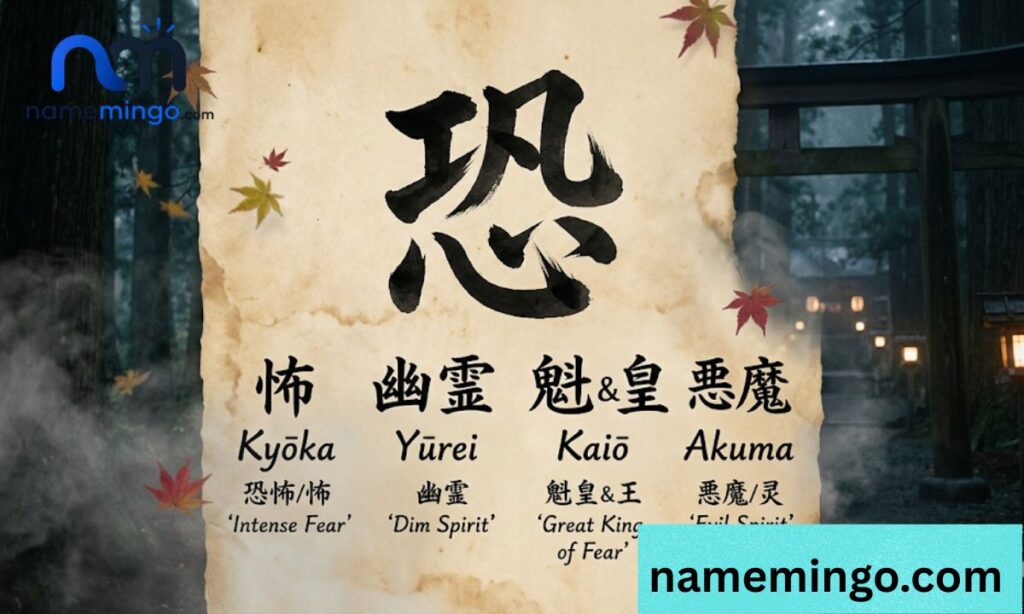
- Kowai: A direct phonetic transcription of the Japanese word for “scary” or “frightening.”
- Kyofu: Japanese origin combining the kanji for “fear” and “dread,” representing systematic terror.
- Osoru: A Japanese verb root meaning “to fear” or “to hold in trembling awe.”
- Iki: Japanese origin meaning “dread” or “withheld breath,” capturing a silent state of panic.
- Kage: Japanese origin meaning “shadow,” a common literary name for a stealthy, fear-inducing presence.
- Yami: Japanese origin meaning “pure darkness,” the realm where primal fear resides.
- Akuma: Japanese origin meaning “demon” or “devil,” a name that strikes immediate cultural fear.
- Oni: Japanese origin referring to the fierce, horned trolls or demons of classical folklore.
- Bakemono: Japanese origin meaning “monter” or “changing thing,” evoking the fear of the unknown.
- Yurei: Japanese origin meaning “faint spirit” or “ghost,” representing the chilling fear of the afterlife.
- Obake: Japanese origin referring to shifshaping spirits that startle and terrify humans.
- Gaki: Japanese origin meaning “hungry ghost,” a terrifying spirit driven by insatiable, desperate desire.
- Ryu: Japanese origin meaning “dragon,” a creature of immense, devastating power and fear.
- Namahage: Japanese folklore figures that visit homes to terrify lazy or misbehaving children.
- Kitsune: Japanese origin meaning “fox,” specifically the mythical, trickster spirits that cause psychological fear.
- Tengu: Japanese origin representing the proud, avian warriors of the mountains who kidnap the unwary.
- Orochi: Japanese mythological origin meaning “eight-branched giant snake,” a creature of absolute dread.
- Raiju: Japanese origin meaning “thunder beast,” a terrifying spirit that accompanies lightning storms.
- Kappa: Japanese origin meaning “river child,” a water cryptid that instills a fear of deep, murky waters.
- Jorogumo: Japanese mythological spider-woman who lures and destroys prey with terrifying cunning.
Nature-Inspired Names That Evoke Fear
- Storm: English origin representing a violent atmospheric disturbance that causes immediate survival fear.
- Tempest: Old French origin meaning “a violent, windy storm,” evoking chaos, power, and panic.
- Avalanche: French origin representing an unstoppable, crushing wall of snow and ice.
- Vortex: Latin origin meaning “a whirlpool or swirling mass,” a force that pulls everything into the deep.
- Blizzard: English origin representing a blinding, freezing winter storm that disorients and kills.
- Gale: Middle English origin meaning “a very strong, terrifying wind.”
- Thunder: Old English origin representing the booming, primal sound that terrifies animals and humans alike.
- Wildfire: English origin representing an uncontrollable, consuming wall of natural fire.
- Eclipse: Greek origin meaning “the abandonment of light,” a terrifying cosmic event in antiquity.
- Quake: English origin representing the violent shaking of the earth’s crust.
- Tsunami: Japanese origin meaning “harbor wave,” the ultimate symbol of oceanic terror and power.
- Cyclone: Greek origin meaning “wheel of wind,” a massive, spinning atmospheric destroyer.
- Abyss: Greek origin meaning “bottomless pit,” evoking the terrifying fear of infinite falling.
- Chasm: Greek origin meaning “a wide, gaping split in the earth,” representing a dangerous, sudden drop.
- Canyon: Spanish origin meaning “tube,” historically a place of dangerous ambushes and claustrophobic fear.
- Monsoon: Arabic/Portuguese origin meaning “season of torrential, flood-inducing rain.”
- Magma: Greek origin meaning “thick unguent,” the molten, terrifying blood of the earth.
- Brier: French origin meaning “heather or thorny bush,” a subtle name for a painful, sharp barrier.
- Viper: Latin origin meaning “venomous snake,” a creature that evokes an instinctual, evolutionary fear.
- Frost: Old English origin representing the cold, deadening grip of winter that halts all life.
Cultural Perspectives on Fear-Based Names
Arabic & Middle Eastern Context
In Arabic naming traditions, names associated with fear are typically framed around majesty, absolute authority, and divine awe. A name like Haibat represents a presence so grand that it strikes a natural, respectful fear into the hearts of others. Similarly, titles derived from the names of lions, sweeping desert storms, or unyielding swords (Saram) are given to project an image of protective terrorfrightening to enemies, but a secure fortress for family and allies.
Japanese Interpretations of Fear
Japanese names carry deep layers of meaning through the selective use of kanji characters. Fear is rarely expressed as simple cowardice; instead, it is linked to the unseen, the elemental, and the supernatural. Characters representing shadows (Kage), midnight darkness (Yami), or ancient mythological spirits are used to build a persona of quiet, focused intensity. It is an aesthetic where fear is treated as an art formsubtle, psychological, and profoundly powerful.
European and Western Fear-Based Names
Western cultures draw heavily from Gothic literature, classical Greek myth, and old Germanic roots to source names that evoke fear. These names often highlight the visceral realities of warfare, dark natural landscapes, and tragic literary heroics. From the harsh, consonant-heavy Germanic surnames to the elegant, tragic figures of Victorian gothic prose, Western fear-based names excel at creating a sharp, unforgettable presence that stands out in modern digital landscapes.
Modern Minimalist Names That Suggest Fear
- Nyx: Greek origin meaning “night,” a sleek, three-letter name packing immense cosmic power and fear.
- Ash: English origin representing the dead, grey remains of a consuming, terrifying fire.
- Lux: Latin origin meaning “light,” but in modern contexts used for the blinding, exposing glare that terrifies the dark.
- Grim: Old Norse origin meaning “stern” or “masked,” a minimalist name for an imposing figure.
- Vane: English origin meaning “unpredictable or weather-cock,” suggesting a volatile, frightening nature.
- Rune: Old Norse origin meaning “secret or mystery,” a tiny name carrying an ancient, intimidating weight.
- Blade: Old English origin representing a sharp, cold weapon designed to inspire immediate fear.
- Shade: Middle English origin representing a lack of light, a cool and mysterious presence.
- Omen: Latin origin meaning “a sign of the future,” carrying a heavy, often terrifying prophetic weight.
- Rogue: French origin meaning “arrogant or unpredictable,” a sleek name for a dangerous outsider.
- Dire: Latin origin meaning “fearful” or “ominous,” a short word that indicates immediate crisis.
- Fox: English origin, an animal name representing a clever, nocturnal predator that inspires avian fear.
- Wolf: German origin, the definitive minimalist predator name, evoking centuries of forest terror.
- Mist: Old Norse origin representing a low, blinding cloud that hides hidden dangers.
- Scar: Old Norse origin meaning “a mark left by a wound,” showing a history of terrifying survival.
- Grey: English origin representing the neutral, cold, and emotionless void between light and dark.
- Dusk: Old English origin representing the specific hour where light dies and night fear begins.
- Gore: English origin representing a sharp, triangular piece of land or visceral battlefield reality.
- Veil: Latin origin meaning “a covering,” representing the terrifying barrier between the living and the dead.
- Crypt: Greek origin meaning “a hidden vault,” a minimalist architectural name loaded with gothic fear.
Curated Names That Mean Fear (With Meanings)
- Phobron: A modern creative fusion of Phobos (fear) and Byron (cottage), meaning a house built on fear.
- Timor: Latin origin meaning “fear” or “dread,” a historic masculine name with a sharp, regal delivery.
- Feargal: Irish origin meaning “man of valor,” specifically one who conquers his own deep fears.
- Metellus: Latin origin meaning “army follower,” historically associated with cold, intimidating Roman discipline.
- Gorgophone: Greek origin meaning “slayer of the Gorgon,” a name that turns the ultimate fear into personal power.
- Bhadra: Sanskrit origin meaning “blessed” or “fortunate,” but carries a secondary meaning of an imposing, awe-inspiring form.
- Kalon: Greek origin meaning “beautiful,” used contextually for a dark, terrifyingly flawless aesthetic.
- Morrigan: Irish origin meaning “great queen” or “phantom queen,” a goddess who used fear to turn the tides of war.
- Sauron: Literary origin meaning “the abhorred” or “the terrifyingly foul,” the ultimate dark lord persona.
- Melkor: Literary origin meaning “he who arises in might,” a name representing primal cosmic rebellion and terror.
- Azazel: Hebrew origin meaning “scapegoat” or “rugged cliff,” a dark angelic figure associated with wilderness fear.
- Abaddon: Hebrew origin meaning “place of destruction” or “the angel of the bottomless pit.”
- Apollyon: Greek origin meaning “the destroyer,” a name that strikes immediate, apocalyptic fear.
- Nergal: Babylonian deity of the underworld, pestilence, and the terrifying realities of war.
- Chernobog: Slavic origin meaning “the black god,” a deity associated with darkness, winter, and primal dread.
- Keres: Greek origin representing the sharp, violent spirits that feast on the fear of wounded warriors.
- Enyo: Greek goddess of war and destruction, often called the “waster of cities,” who excelled at spreading panic.
- Sariel: Hebrew origin meaning “command of God,” an angel associated with death and the terrifying scale of heaven.
- Tiamat: Babylonian primordial goddess of the ocean, representing chaos, sea monsters, and primordial fear.
- Leviathan: Hebrew origin meaning “twisted, coiled monster,” the ultimate symbol of terrifying deep-sea power.
- Behemoth: Hebrew origin representing a massive, primeval land beast whose sheer size inspires terrifying awe.
- Belial: Hebrew origin meaning “worthless” or “wicked,” a name used to represent a lawless, terrifying entity.
- Asmodeus: Persian/Hebrew origin representing the king of demons, carrying an aura of pride and terrifying intellect.
- Mephisto: German literary short form representing a clever, devastatingly smooth, and terrifying tempter.
- Lucifer: Latin origin meaning “light-bringer,” a beautiful name forever altered by its association with ultimate rebellion and dark power.
Frequently Asked Questions
What name means a fear of your past?
The most accurate conceptual name for a fear of your past is Anamnesis (Greek origin meaning the vivid, sometimes overwhelming recollection of past memories) or Atavism (Latin origin representing the sudden, fearful resurgence of ancient, ancestral traits or past history catching up to the present).
Are fear-based names suitable for real-life use?
Yes, especially when chosen subtly. While names like Terror or Panic are bold choices ideal for digital publishing, usernames, and creative characters, names with subtle meanings like Valeria, Brennan, Gideon, or Silas allow individuals to carry a formidable, powerful lineage in everyday life without sounding overtly aggressive.
Why do some cultures give children names that mean fear?
Historically, many cultures used a practice called “apotropaic naming.” By giving a child a name that sounded frightening, dark, or undesirable (such as names meaning dread or shadow), they believed they could trick evil spirits or bad luck into ignoring the child, effectively protecting them through a shield of fear.

Daniel is the creator of Namemingo.com, a writer guided by curiosity and a deep passion for the stories behind names. With a background in linguistics, cultural history, and name etymology, Daniel transforms complex research into clear, engaging, and easy-to-understand content. His writing invites readers to explore the rich origins, spiritual meanings, and cultural significance hidden within everyday names.