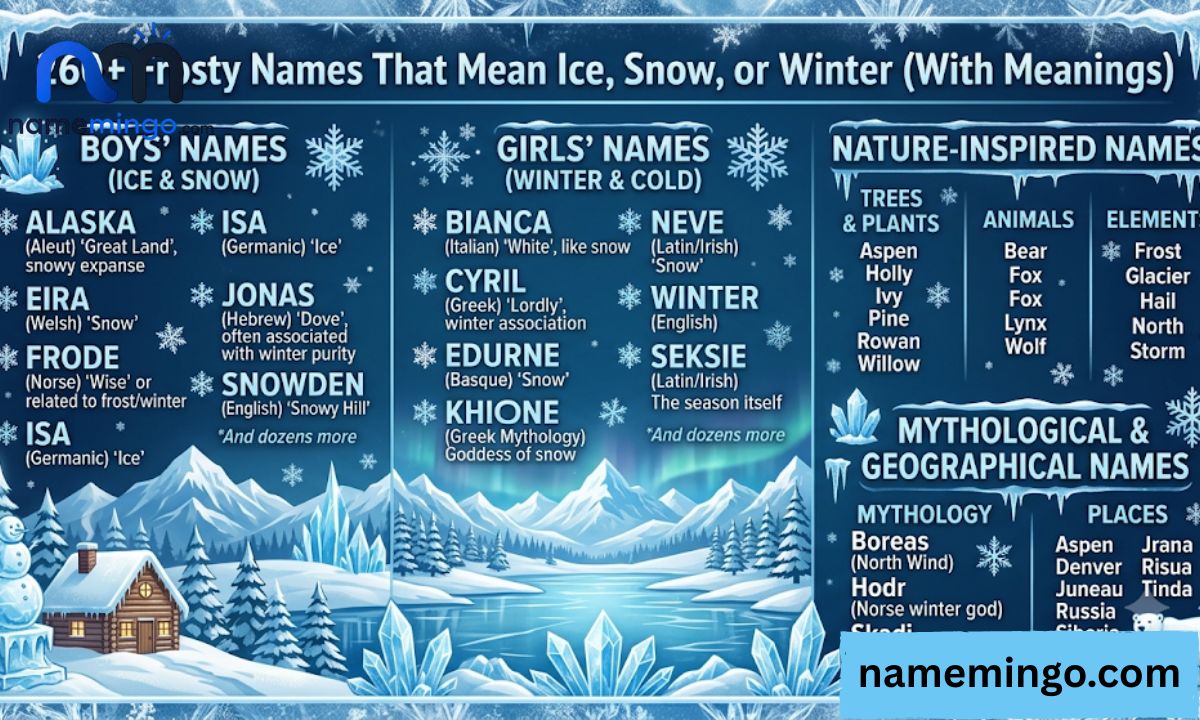
Winter has always inspired parents when naming their children. Snow, ice, and frost carry a quiet kind of beauty. Many cultures turned these cold wonders into meaningful names.
Some names come from real winter words in different languages. Others simply mean “born in winter” or “child of snow.” Each name carries a story about coldness, purity, or calm.
These frosty names suit babies born in the colder months. They also work well for anyone who loves winter’s charm. Below, you’ll find a list of names that mean ice, snow, or winter, along with their meanings.
Top 5 Trending Picks in 2026
Yuki :This Japanese name means “snow” and has quietly become one of the most popular unisex picks worldwide. Its soft sound and clean spelling make it a favorite for 2026 baby name lists.
Frost :Once purely a surname, Frost has crossed over into first-name territory for both boys and girls. It carries a crisp, nature-inspired edge that feels modern rather than old-fashioned.
Elsa :Norse in origin and loosely tied to “noble,” Elsa’s icy association (thanks to pop culture) keeps it trending as a cool-girl classic. It’s short, elegant, and easy to say in almost any language.
Bora :A Turkish name referring to a cold, powerful north wind. It’s gaining traction as a short, strong, gender-neutral option with a distinctly wintry feel.
Zima :The Slavic word for “winter,” Zima has started appearing as a given name thanks to its sleek, minimalist sound. It works well as a unisex choice with real seasonal meaning.
Names that Mean Ice in Japanese
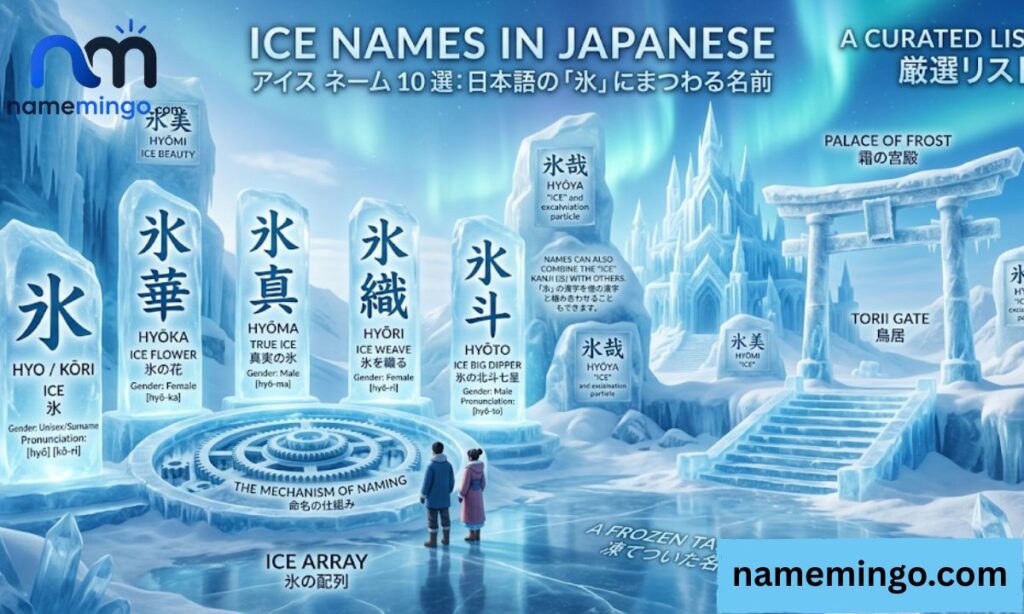
Yuki :Written with characters that can mean “snow,” Yuki is soft, gender-neutral, and one of the most recognizable Japanese ice-and-snow names abroad. It pairs easily with Western middle names.
Kori :A direct translation of “ice” in Japanese, Kori is short and simple. It’s less common as a given name but works beautifully as a nickname or unisex choice.
Hyou :This name uses the kanji for “ice” and has a crisp, minimal sound. It’s more commonly seen in surnames or compound names than as a standalone first name.
Rin :Rin can carry meanings like “dignified” or “cold,” depending on the kanji chosen, giving it a cool, composed feel. It’s popular for both boys and girls in Japan today.
Koori :A slightly longer reading of “ice,” Koori has a rhythmic, flowing sound. It’s often used in fiction and anime for characters with icy or reserved personalities.
Tsurara :This charming name literally means “icicle.” It’s rare as a given name but beloved in folklore and creative writing for its vivid, wintry imagery.
Shimo :Meaning “frost,” Shimo is short, sharp, and distinctive. It works well as a unisex name for parents wanting something unusual but easy to pronounce.
Reito :Built from characters relating to “freezing” or “refrigeration,” Reito has a modern, almost technical edge. It stands out among more traditional Japanese names.
Yukiko :Meaning “snow child,” Yukiko is a classic, feminine name that has been popular across generations in Japan. It carries a gentle, nostalgic charm.
Yukio :The masculine counterpart to Yukiko, Yukio means “snow man” or “snow boy.” It has a strong literary history, including famous namesakes in Japanese fiction.
Fuyuko :Combining “winter” and “child,” Fuyuko is a seasonal name traditionally given to girls born in the colder months. It has a soft, old-fashioned warmth despite its wintry meaning.
Mizore :This name means “sleet,” a mix of snow and rain. It’s unusual and evocative, often chosen for its poetic, weather-inspired imagery.
Names that mean ice cream
A quick honesty check: no traditional name in any major language actually translates to “ice cream” :it’s simply not a naming category the way “ice” or “snow” is. Instead, here are dessert- and frozen-treat-inspired names parents are borrowing for a playful, sweet vibe.
Sundae :Taken directly from the classic ice cream dessert, Sundae has started appearing as a whimsical, sugary-sweet first name. It’s bold, memorable, and undeniably fun.
Gelato :Borrowed from the Italian frozen dessert, Gelato brings a smooth, romantic sound. It’s more of a novelty pick than an established name, but it’s gaining social media popularity.
Sorbet :Light and airy just like the dessert itself, Sorbet has a French flair. It works best as a nickname or middle name rather than a formal first name.
Kulfi :A traditional South Asian frozen dessert, Kulfi has begun surfacing as an affectionate nickname. It carries cultural warmth alongside its icy, sweet meaning.
Helado :Simply the Spanish word for “ice cream,” Helado is unconventional but carries a bright, sunny-day sweetness. It’s rarely used formally but pops up in creative naming circles.
Glace :French for “ice cream” or “icy,” Glace is elegant and understated. Its dual meaning of both ice and dessert makes it a versatile crossover pick.
Nieve :Meaning “snow” in Spanish, Nieve is often linked loosely to icy desserts in warm-weather cultures. It’s a real, established name with a cool, crisp sound.
Praline :A nutty, caramelized treat often folded into ice cream, Praline has a rich, old-world sound. It leans more toward nickname territory than a standalone first name.
Cassata :Named after the Italian ice cream cake, Cassata is unusual and layered, much like the dessert itself. It’s rare but distinctive for parents wanting something truly one-of-a-kind.
Affogato :Combining coffee and ice cream, Affogato has a bold, espresso-dark sound. It’s an unconventional pick that stands out in any room.
Frappe :Light, cold, and blended, Frappe has a breezy, summery feel despite its icy roots. It works well as a nickname for a longer formal name.
Neapolitan :Inspired by the three-flavor ice cream, Neapolitan is playful and a little theatrical. It’s best suited as a fun middle name rather than a primary one.
What is a name that means ice
Kori :This Japanese name is a literal translation of “ice.” It’s clean, short, and works well across genders.
Zima :Slavic for “winter,” Zima has strong icy associations even though its literal meaning is seasonal. It’s minimalist and increasingly popular.
Bora :A Turkish word for a cold north wind, Bora carries an unmistakably icy, wintry feeling. It’s short, strong, and gender-neutral.
Talvi :The Finnish word for “winter,” Talvi is soft-sounding yet firmly tied to cold, snowy imagery. It’s rare outside Finland but distinctive elsewhere.
Buz :Simply the Turkish word for “ice,” Buz is bold and minimal. It’s more commonly used as a nickname than a formal given name.
Cristal :Derived from “crystal,” Cristal evokes the clear, glassy look of ice. It’s an established name with elegant, icy undertones.
Neve :Meaning “snow” in Italian and Portuguese, Neve is soft, feminine, and widely used. It’s one of the more mainstream ice-adjacent names available.
Rime :An English word for the frost that forms in freezing fog, Rime is short and atmospheric. It’s uncommon as a given name but works well as a striking middle name.
Sleet :A straightforward English weather term, Sleet is edgy and unconventional. It suits parents drawn to nature-word names with a harder edge.
Frost :Perhaps the most direct English option, Frost describes the icy coating that forms in cold weather. It’s increasingly used as a first name for both boys and girls.
Glacia :A stylized, invented form of “glacier,” Glacia sounds elegant and mythic. It’s not a traditional name but fits comfortably alongside other nature-inspired coinages.
Icelyn :A modern blend combining “ice” with the popular “-lyn” suffix, Icelyn is a soft, feminine option. It reads as trendy rather than historical.
A last name that means ice
Frost :One of the most recognizable English surnames tied to ice, Frost likely originated as a nickname for someone with a cold temperament or white hair. It’s widely used today as both a first and last name.
Winter :An English surname referring to someone born in or associated with the winter season. It’s closely linked to icy, snowy imagery even though it technically names a season.
Schnee :The German word for “snow,” Schnee exists as a surname in German-speaking regions. It has a crisp, clean sound that translates well internationally.
Ledenev :A Russian surname derived from “лёд” (led), meaning “ice.” It carries strong Slavic roots and a cold, formal tone.
Koudijs :A Dutch surname built from “koud,” meaning “cold.” It likely originated as a locational or descriptive name tied to a chilly area.
Buzdağı :A Turkish surname combining “buz” (ice) and “dağ” (mountain), literally meaning “ice mountain.” It’s a striking, image-rich family name.
Lagace :A French-Canadian surname derived from “glace,” meaning “ice.” It’s common among Quebecois families and has a smooth, romantic sound.
Eis :The German word for “ice” used directly as a surname in some regions. It’s short, blunt, and easy to recognize across languages.
Coldwell :An English surname meaning “cold spring” or “cold well,” tying its origin to icy water sources. It has an old, aristocratic feel.
Winters :A variant of “Winter,” Winters is a common English surname evoking the coldest season. It’s frequently used as a stylish unisex first name today.
Zimin :A Russian surname derived from “зима” (zima), meaning “winter.” It has a strong, formal sound rooted in Eastern European tradition.
Frostman :A more literal English surname combining “frost” with “man,” likely describing someone associated with cold conditions or icy trades. It has a folkloric, almost storybook quality.
Male names that mean ice
Kori :Used as a masculine name in Japan, Kori translates directly to “ice.” It’s short, modern, and easy to pronounce internationally.
Hyou :A Japanese boy’s name built from the kanji for “ice,” Hyou has a sharp, minimal sound. It suits parents wanting something rare and distinctive.
Yukio :Meaning “snow man” or “snow boy” in Japanese, Yukio is a well-established masculine name with literary history. It balances softness with strength.
Bora :This Turkish name for a cold north wind works well for boys, carrying a rugged, elemental feel. It’s short and easy to say across languages.
Frost :As a boy’s name, Frost brings a crisp, no-nonsense energy borrowed directly from the English surname. It fits current trends toward nature-based masculine names.
Talvi :Though unisex in Finland, Talvi (“winter”) is increasingly chosen for boys wanting a soft yet seasonally rooted name. It stands out without being difficult to pronounce.
Boreas :Named after the Greek god of the cold north wind, Boreas has a mythological weight and dramatic sound. It suits parents drawn to classical, elemental names.
Jökull :An Icelandic word meaning “glacier,” Jökull is bold and rooted in dramatic Nordic landscapes. It’s rare outside Iceland but strikingly unique.
Zima :Used for boys as well as girls, Zima (“winter”) has a clean, modern sound with clear icy associations. Its brevity makes it easy to pair with longer middle names.
Reito :Meaning “freezing” in Japanese, Reito has a modern, almost technical feel. It’s uncommon but distinctive for parents wanting something truly unusual.
Fuyuki :Combining “winter” and characters meaning “tree” or “hope,” Fuyuki is a masculine Japanese name with quiet depth. It carries both seasonal and symbolic meaning.
Koori :Another reading of “ice” in Japanese, Koori has a flowing, rhythmic sound often used for boy characters in fiction. It reads as gentle despite its icy meaning.
Why Ice Inspired Names Feel Powerful
Ice carries a quiet contradiction that makes it such a compelling naming theme: it’s both fragile and unbreakable, cold on the surface yet capable of shaping entire landscapes. Names built around ice, frost, and snow borrow that same tension, giving children an identity that feels calm, resilient, and quietly striking rather than loud or overstated.
There’s also a strong cross-cultural pull to these names. Nearly every language and mythology has its own words and legends tied to ice and winter, which means parents can choose an ice-inspired name that reflects a specific heritage while still tapping into a universally understood symbol of clarity, strength, and endurance.
Scandinavian and Nordic Ice Names
Frosti :An Old Norse name meaning simply “frost,” Frosti appears in Norse mythology as the name of a dwarf. It’s short, punchy, and rooted in genuine folklore.
Jökull :Icelandic for “glacier,” Jökull is used as both a place name and a given name in Iceland. It has a bold, geographic weight to it.
Isolde :Though its exact etymology is debated, Isolde is often linked to old Germanic elements suggesting “ice ruler.” It’s a romantic, legendary name with deep literary roots.
Snæfríður :An Icelandic name combining “snow” and “beautiful,” Snæfríður is elegant but challenging to pronounce outside Iceland. It’s treasured locally for its poetic imagery.
Snjólaug :Meaning roughly “snow woman” in Icelandic, Snjólaug is traditional and tied closely to the country’s snowy landscape. It’s rare but deeply rooted in Nordic naming customs.
Vinter :The Swedish word for “winter,” Vinter has begun appearing as a modern given name. Its clean, single-syllable-adjacent sound fits current Scandinavian naming trends.
Elsa :A Norse-rooted name meaning “noble,” Elsa has become globally associated with ice through popular culture. It remains a strong, elegant choice on its own merits.
Iselin :A Norwegian name derived from Elizabeth, Iselin has an icy sound even though its meaning relates to “God’s promise.” Its popularity in Norway has kept it fresh and current.
Kulda :Icelandic for “cold,” Kulda is stark and minimal. It’s more commonly used descriptively than as a formal given name, but it fits creative naming choices well.
Isvind :Combining “ice” and “wind” in Norwegian-inspired construction, Isvind sounds dramatic and elemental. It works well for parents wanting an invented but authentic-feeling Nordic name.
Frostmund :A constructed Norse-style name combining “frost” with the common Germanic suffix “-mund” (protection), Frostmund has a strong, ancient sound. It suits boys particularly well.
Snjólfur :An Old Norse name meaning “snow wolf,” Snjólfur combines two powerful natural symbols. It’s rare today but historically documented in Icelandic sagas.
Ísfold :Meaning “ice-earth” or “ice-land” in Icelandic-style construction, Ísfold has a mythic, geographic quality. It’s unusual and evocative for parents seeking something truly rare.
Kald :The Scandinavian word for “cold,” Kald is blunt and minimal. It works better as a nickname or stylistic element than a full first name.
Hrimfaxi :The name of the horse that brings frost and dew across the sky each night in Norse mythology. It’s dramatic and mythological, better suited to fiction or a bold middle name.
Japanese Names That Mean Ice or Snow
Yukino :Meaning “snow field” or “snow of,” Yukino is a soft, feminine name popular in both real life and Japanese media. It has a gentle, flowing rhythm.
Yukiya :A masculine variant built around “snow,” Yukiya carries a calm, composed feel. It’s traditional yet still used today.
Yukine :A softer, more poetic reading involving “snow,” Yukine has a delicate, almost ethereal quality. It’s less common but memorable.
Fubuki :Meaning “snowstorm” or “blizzard,” Fubuki is bold and dramatic compared to gentler snow names. It’s often used for strong, striking characters in fiction.
Shimofuri :Referring to “frost-covered” or a frosted pattern, Shimofuri is unusual as a personal name but rich in imagery. It’s more commonly seen in descriptive or artistic contexts.
Setsuko :Meaning “snow child,” Setsuko is a classic, traditional Japanese name for girls. It has a timeless, old-fashioned charm.
Setsuna :Combining “snow” with a term suggesting a fleeting moment, Setsuna has a bittersweet, poetic quality. It’s popular in Japanese literature and media.
Mayuki :Blending “true” or “beautiful” with “snow,” Mayuki is a soft, layered feminine name. It carries both elegance and seasonal meaning.
Miyuki :Meaning “beautiful snow,” Miyuki is one of the more established and widely used Japanese snow names. It has graced everything from people to product names.
Yukari :Though not always tied strictly to snow, Yukari is often associated with “snow village” readings depending on kanji. It’s soft, common, and easy to pronounce.
Fuyumi :Combining “winter” and “beauty,” Fuyumi is a traditional feminine name for girls born in colder months. It has an old-fashioned warmth despite its wintry roots.
Fuyuka :Meaning “winter fragrance” or “winter flower,” Fuyuka pairs a cold season with something delicate and alive. It’s a gentle contrast within a single name.
Rinko :Combining “cold” or “dignified” with “child,” Rinko has a composed, elegant sound. It’s used for girls seeking a name with quiet strength.
Kohyou :Meaning “small ice” or “thin ice,” Kohyou is delicate and unusual. It’s rarely used but visually and phonetically striking.
Shirayuki :Literally “white snow,” Shirayuki is best known internationally as the Japanese equivalent of “Snow White.” It’s vivid, classic, and instantly evocative.
Slavic and Eastern European Frost Names
Zima :Meaning “winter” across several Slavic languages, Zima is short, modern, and increasingly used as a standalone given name. Its minimalism makes it easy to use internationally.
Snezhana :A feminine name meaning “snowy,” popular across Russia, Bulgaria, and the Balkans. It has a soft, lyrical sound paired with clear wintry imagery.
Snegurochka :Known as the “Snow Maiden” from Russian folklore, Snegurochka is a beloved fairy-tale figure rather than a common given name. It’s culturally rich and instantly recognizable in Slavic countries.
Ledena :Meaning “icy” in Bulgarian and Macedonian, Ledena is direct and evocative. It’s an uncommon but striking choice for a girl’s name.
Zimniy :The masculine form relating to “winter” in Russian, Zimniy has a strong, formal sound. It’s more commonly used as an adjective than a first name, but works well stylistically.
Moroz :Meaning “frost” in Russian, Moroz is best known from “Ded Moroz,” the Slavic Father Frost figure. It’s a strong, weighty surname-style name with deep cultural roots.
Zimowit :An old Polish name combining “winter” and “lord” or “host,” Zimowit has historical depth from early Slavic naming traditions. It’s rare today but authentic and distinctive.
Snezhinka :Meaning “snowflake” in Russian, Snezhinka is delicate and highly poetic. It’s more often used affectionately than as a formal legal name.
Snieguolė :The Lithuanian equivalent of “Snow White,” Snieguolė is soft and melodic. It’s tied closely to fairy-tale tradition in the Baltic region.
Zimka :A diminutive form related to “zima” (winter), Zimka is playful and approachable. It works well as a nickname for longer Slavic winter names.
Snježana :The Croatian and Bosnian spelling of “snowy,” Snježana is a well-established feminine name across the former Yugoslav region. It has a bright, crisp sound.
Ledislav :A constructed name blending “led” (ice) with the common Slavic suffix “-slav” (glory), Ledislav has an inventive, powerful feel. It fits the pattern of traditional Slavic compound names.
Moroza :A feminine form related to “Moroz” (frost), Moroza carries the same wintry strength with a softer ending. It’s uncommon but recognizable within its linguistic family.
Zimin :A Russian surname-turned-given-name derived from “zima,” Zimin has a formal, grounded sound. It works well for parents wanting a subtle nod to winter.
Ledka :A diminutive tied to “led” (ice), Ledka is short and affectionate. It functions best as a nickname within a Slavic-speaking family.
Also Read This:259+ Names That Mean Pink: Soft Power, Identity, and the New Language of Color
Modern English Ice and Frost Names
Frost :A direct, no-frills English name describing the icy coating that forms in cold weather. It’s increasingly popular as a unisex first name.
Winter :Naming a child after the coldest season, Winter has become one of the most widely used seasonal names in English-speaking countries. It works for any gender.
Snow :Simple and evocative, Snow captures the imagery of a wintry landscape in a single word. It’s been popularized further by well-known fictional characters.
Snowy :A softer, more affectionate variant of “Snow,” Snowy has a warmer, nickname-like quality. It’s better suited to informal use or as a middle name.
Icelyn :A modern invented name blending “ice” with the trendy “-lyn” ending, Icelyn is feminine and contemporary. It reads as fresh rather than historical.
Ice :About as direct as a name can get, Ice is bold, short, and often chosen for its confident, stripped-down sound. It’s more common as a nickname or stage name than a legal first name.
Crystal :Evoking the clear, glassy look of ice, Crystal has been a popular English name for decades. It carries elegance alongside its icy visual connection.
Blizzard :An intense, dramatic weather term, Blizzard is unconventional as a given name but occasionally used for its bold, attention-grabbing quality. It suits parents wanting something truly unique.
Glacier :Naming a child after a massive, ancient ice formation, Glacier is powerful and nature-forward. It’s grown in use alongside other geographic and landscape names.
Rime :Referring to the frost that forms in freezing fog, Rime is short, atmospheric, and increasingly chosen for its understated cool factor. It works well as either a first or middle name.
Sleet :A blunt weather term describing a mix of snow and rain, Sleet has an edgy, modern sound. It suits parents drawn to harder-edged nature names.
Hoarfrost :Describing the delicate ice crystals that form on surfaces in freezing weather, Hoarfrost is elaborate and visually rich. It’s rarely used whole but inspires shorter derivative names.
Frostine :A feminized, softened version of “Frost,” Frostine has an elegant, old-world sound. It works well for parents wanting a wintry name with more traditional femininity.
Winters :A pluralized form of “Winter,” Winters carries the same seasonal meaning with a slightly more surname-like weight. It’s used for both boys and girls today.
Snowden :Meaning “snow hill” from its English surname origins, Snowden has crossed over into first-name use. It has a strong, structured sound.
Boreal :Referring to the cold, northern regions of the world, Boreal has an expansive, geographic quality. It’s modern and increasingly used in nature-inspired naming circles.
Arctic :Naming a child directly after the icy polar region, Arctic is bold and striking. It’s rare but memorable, often chosen for its strong visual and geographic association.
Yukon :Borrowed from the icy Canadian territory, Yukon has a rugged, adventurous sound. It’s grown in popularity as a place-name option with clear cold-weather ties.
Chilton :An English surname meaning “cold farm” or “cold settlement,” Chilton has a formal, structured sound. It works well as a distinguished first name with subtle wintry roots.
Frosty :A casual, friendly version of “Frost,” Frosty has a warm, approachable feel despite its icy meaning. It’s best suited as a nickname rather than a formal given name.
Last Names That Mean Ice
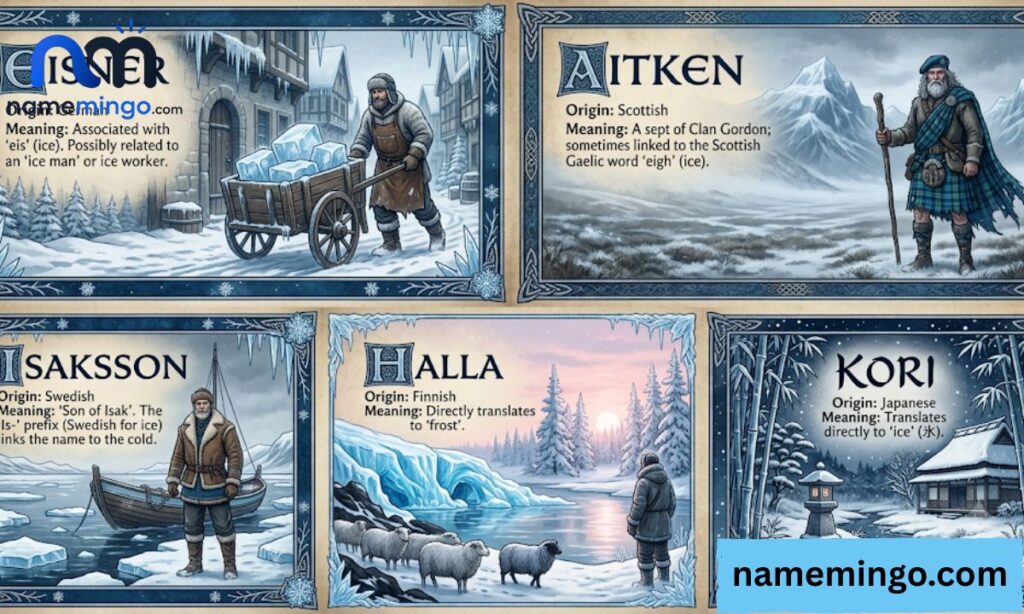
Frost :English surname taken directly from the word for frozen dew, originally given to someone born in cold weather. It reads sharp and literary, a favorite for pen names and cold-climate branding.
Snow :An English surname likely tied to birth during a snowy season or a pale complexion. Short and iconic, it now doubles as a stylish first name for both boys and girls.
Winter :A German and English surname marking someone born in the winter months. It feels grounded and seasonal, equally at home as a first or last name.
Winters :The pluralized English variant of Winter, common in the American South. It carries a folksy, storytelling warmth despite its icy root.
Eis :German for “ice,” a compact occupational or descriptive surname. It’s often the root of longer German ice-surnames like Eisner or Eismann.
Eisner :German occupational surname tied to “Eis” (ice) or ironwork trades. Its crisp double syllables make it sound sturdy and professional.
Kald :Norwegian for “cold,” used historically as a descriptive surname. It’s blunt and Nordic, popular in fantasy naming for its stark sound.
Frostrup :Danish surname combining “frost” with “rup” (ridge or clearing). It evokes a literal frosty landscape and works well for atmospheric branding.
Xue :Chinese surname meaning “snow,” one of the more common snow-rooted family names. It’s elegant in its simplicity and carries deep cultural resonance.
Yukimura :Japanese surname meaning “snow village.” It has a poetic, almost cinematic quality often used in period dramas.
Snø :Norwegian variant spelling of “snow,” used as a rare modern surname. Its single syllable makes it feel minimalist and Scandinavian-chic.
Frore :Archaic English word for “frozen” or “frosty,” revived as a surname. It sounds old-world and mysterious, ideal for historical fiction.
Rime :English word for a frost that forms in fog, used as a family name. It’s short, evocative, and increasingly popular in creative naming circles.
Glace :French for “ice,” borrowed into English as a stylish surname. It has a luxury, patisserie-like elegance that feels effortlessly chic.
Ísberg :Icelandic for “iceberg,” a striking descriptive surname. It’s dramatic and visual, suited to bold personal branding.
Kylmä :Finnish for “cold,” occasionally used as a surname. It’s austere and direct, echoing the stark beauty of Nordic winters.
Ledenev :Russian surname derived from “lëd,” meaning ice. It carries the weight of old Russian lineage and folklore.
Morozov :Russian surname meaning “of the frost,” tied to Morozko, the frost spirit. It’s a common, storied name with strong literary associations.
Snegur :Russian root meaning “snow,” related to the Snow Maiden legend. It feels mythic and gentle, perfect for character or brand naming.
Frosti :Old Norse for “frost,” also the name of a dwarf in Norse mythology. It’s short, mythological, and increasingly used as a unisex first name.
Also Read This:384+ Powerful Girl Names That Mean Warrior: Strong, Brave & Fearless Choices 2026
Rare and Inventive Ice Inspired Names
Icely :A modern coinage blending “ice” with a soft, lyrical ending. It feels delicate yet distinctive, suited to a name that stands out gently.
Frostine :An invented feminine form built from “frost” plus a French-style suffix. It reads as elegant and wintry without feeling costume-like.
Glacian :A constructed name rooted in “glacial,” giving it a strong, ancient feel. It suits a name meant to sound timeless and powerful.
Icewyn :A blend of “ice” and the Old English “wyn” (joy). It merges coldness with warmth, a clever contrast in meaning.
Frostel :A crisp invented name shortened from “frost” with a modern edge. It works well as a sleek, contemporary unisex option.
Icelle :A softened, feminine spin on “ice” with a French flourish. It feels romantic and delicate, ideal for a lyrical character name.
Frosalyn :A blend of “frost” and the popular suffix “-alyn.” It sounds familiar yet fresh, bridging classic and invented styles.
Glacielle :An elaborate coinage from “glacier” with a graceful ending. It has a fairy-tale quality, elegant and slightly whimsical.
Icetta :A playful, compact invented name built on “ice.” It feels youthful and spirited, good for a lighter tone.
Frostyna :A stylized feminine variant of “frost.” It carries old-world charm with a distinctly wintry identity.
Snowlyn :A blend of “snow” and “-lyn,” following modern naming trends. It sounds soft and contemporary, easy to pair with many surnames.
Icemara :A dramatic coinage merging “ice” with “Mara,” suggesting bittersweetness. It has a haunting, poetic quality suited to fantasy or literary use.
Frosaline :An invented elaboration on “Frost” echoing classic “-aline” names. It feels vintage-inspired while staying rooted in winter imagery.
Glacene :A sleek, minimal invented name from “glacier.” It reads modern and architectural, fitting for a design-forward identity.
Icewren :A nature-inspired blend of “ice” and “wren.” It merges the chill of winter with the lightness of a small bird.
Frostiva :An invented name suggesting celebration (“festiva”) within frost. It has a festive, almost mythic winter-holiday feel.
Snowira :A constructed name pairing “snow” with an exotic-sounding ending. It feels global and distinctive, good for a name with international flair.
Icendra :A dramatic invented name blending “ice” with “-endra.” It carries a regal, fantasy-queen energy.
Frostalia :An elaborate coinage suggesting a festival or realm of frost. It works beautifully as a place name or a grand character name.
Glacinda :A soft, invented feminine name rooted in “glacier.” It sounds gentle and old-fashioned despite its icy origin.
Icoria :A polished invented name blending “ice” with “-oria.” It has an ethereal, almost celestial quality.
Snowdyn :A modern, edgy blend of “snow” and “dynamic.” It feels bold and unconventional, suited to a strong personal brand.
Frostwyn :A pairing of “frost” with the Old English “wyn,” meaning joy. It captures the paradox of cold beauty and inner warmth.
Icaris :A coinage evoking both “ice” and “Icarus.” It carries a mythic, adventurous energy despite its wintry base.
Glacoria :An invented, opulent-sounding name built on “glacier.” It feels grand and cinematic, well-suited to fantasy worldbuilding.
Gender Neutral Ice Names for Modern Identity
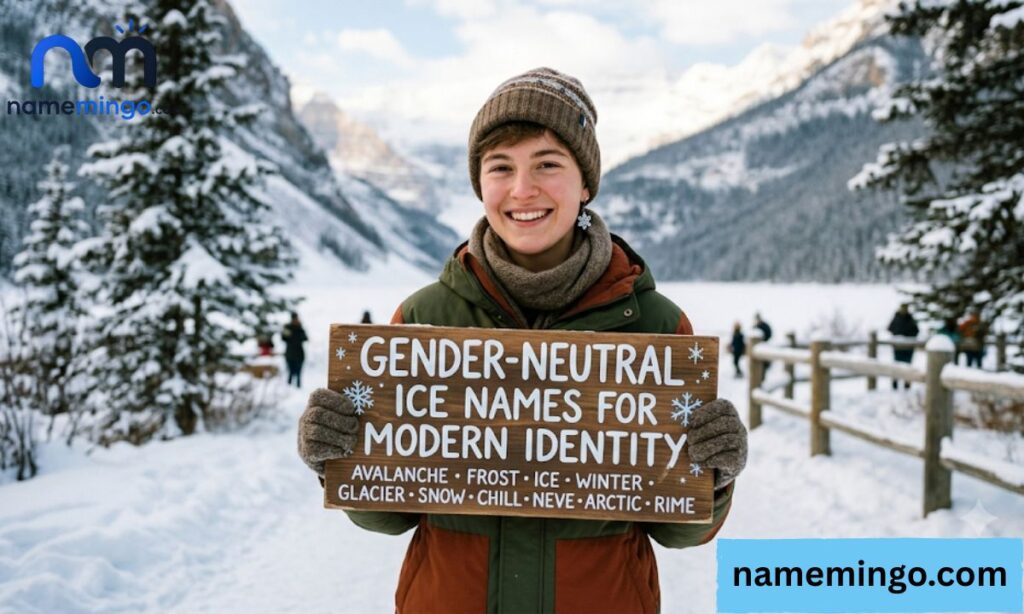
Frost :A surname-turned-first-name used freely across genders today. Its clipped, single syllable makes it easy to carry into adulthood.
Snow :A nature word name embraced equally by boys, girls, and nonbinary namesakes. It’s simple, memorable, and carries no strong gendered history.
Winter :Once a surname, now a popular seasonal first name for any gender. It feels warm in tone despite its cold-season meaning.
Rime :A rare nature-word name referring to frozen fog. Its brevity and unfamiliarity make it a fresh, ungendered choice.
Glace :French for “ice,” used as a sleek unisex option. It sounds sophisticated and works comfortably across genders.
Sleet :A weather-word name capturing a mix of rain and snow. It’s edgy and modern, appealing to parents wanting something unconventional.
Yuki :Japanese for “snow,” traditionally used for both boys and girls. It’s short, globally recognized, and gentle on the ear.
Kaal :An invented, cold-sounding name evoking chill and stillness. Its ambiguous origin makes it flexible for any gender identity.
Boreal :Referring to northern, cold-climate regions and forests. It has an outdoorsy, nature-forward feel suited to any child.
Arcticus :A Latin-styled invented name built on “Arctic.” It sounds strong and geographic, fitting a bold, unisex identity.
Nieve :Spanish for “snow,” traditionally feminine but increasingly used broadly. It’s soft yet crisp, easy to pronounce across languages.
Storm :A weather name often linked to winter storms and ice events. It’s been a popular unisex choice for decades due to its strength.
Glacier :A geographic feature name suggesting permanence and cold beauty. It’s striking and rare, ideal for a name that stands apart.
Icel :A pared-down invented name rooted simply in “ice.” Its minimalism makes it naturally gender-flexible.
Frostlyn :A blended name pairing “frost” with the trendy “-lyn” ending. It leans slightly softer but works well as a unisex option.
Chill :A bold, informal word name capturing coolness and calm. It’s unconventional but memorable, suited to a laid-back identity.
Cryo :A scientific-sounding root meaning “cold” or “freezing.” It feels modern and technical, appealing to parents wanting something unique.
Polar :Referencing the poles and their icy extremes. It’s confident and geographic, fitting for an adventurous spirit.
Nord :Meaning “north” in several European languages, evoking cold climates. It’s short, strong, and easily unisex across cultures.
Tundra :Referring to the frozen, treeless biome. It’s an unusual nature name that feels rugged and distinct.
Solstice :Marking the winter turning point of the year. It carries symbolic weight around renewal and cycles of cold and light.
Permafrost :A striking, scientific word name for permanently frozen ground. It’s unconventional and memorable, best suited to bold namers.
Blizzard :A dramatic weather-word name suggesting intensity and force. It’s rare as a given name but powerful in tone and presence.
Aurora :Linked to polar auroras and icy night skies. It’s become a popular unisex-leaning choice with celestial charm.
Nord Sky (compound) :A pairing suggesting northern, icy skies. It works as a modern two-part name for a distinctive identity.
Girl Names That Mean Ice
Yuki :Japanese for “snow,” a beloved and gentle girl’s name. It carries quiet elegance and a strong seasonal identity.
Nieves :Spanish for “snows,” often linked to Marian devotional names. It has a warm, traditional Hispanic heritage feel.
Neva :Rooted in Spanish “nieve,” meaning snow-white. It’s soft and lyrical, easy to pair with many middle names.
Sniega :Latvian for “snow,” a distinctive Baltic option. It feels rare and regionally rooted, appealing to unique namers.
Chiona :Greek, from “chion” meaning snow. It has classical roots and a graceful, flowing sound.
Frostine :A French-inspired coinage meaning “of frost.” It feels romantic and delicately wintry.
Blanche :French for “white,” long associated with snow and purity. It’s a vintage classic experiencing renewed interest.
Icelyn :A modern coinage blending “ice” with the trendy “-lyn” suffix. It sounds contemporary and effortlessly wearable.
Glacia :A Latin-rooted invented name meaning “icy one.” It carries strength and a slightly mythic quality.
Frore :A poetic English word for “frosty,” repurposed as a name. It’s rare and literary, ideal for a distinctive choice.
Winterlyn :An invented blend of “winter” with a soft modern ending. It feels current while keeping its seasonal roots clear.
Snowdrop :Named after the winter-blooming flower. It’s delicate and nature-forward, popular in botanical naming trends.
Crystal :A gem name often associated with ice and clarity. It has a timeless, sparkling quality that transcends trends.
Rime :English for frozen fog, used as a spare, elegant girl’s name. It’s short and striking, appealing to fans of nature words.
Frostina :An elaborated invented form of “frost.” It sounds old-fashioned yet fresh, blending eras gracefully.
Iciar :A Basque name meaning “view of snowy peaks.” It carries deep regional heritage and a strong mountain identity.
Snizhana :Ukrainian for “snowy,” a beloved traditional name. It’s melodic and carries rich Eastern European roots.
Snezhana :The Bulgarian and Russian variant meaning “snowy.” It’s widely used and carries a soft, folkloric charm.
Yukiko :Japanese for “snow child.” It’s tender and classic, a favorite across generations in Japan.
Frostyn :An invented modern name built from “frost.” It’s crisp and current, fitting today’s short nature-name trend.
Alaska :A place name evoking vast icy wilderness. It’s bold and unconventional, popular among nature-inspired namers.
Elsa :Though rooted in “noble,” it’s culturally tied to ice through storytelling. It feels regal and instantly recognizable to modern audiences.
Nix :Latin for “snow,” short and striking. It’s edgy and minimal, appealing to fans of one-syllable names.
Nivea :From Latin “niveus,” meaning snowy or snow-white. It feels soft and luminous, with a touch of vintage glamour.
Bianca :Italian for “white,” closely tied to snow and purity. It’s a timeless European classic with elegant simplicity.
Candida :Latin for “white” or “bright,” evoking snow’s purity. It has a classical, almost saintly resonance.
Eira :Welsh for “snow,” a real and increasingly popular given name. It’s short, lyrical, and rich with Welsh heritage.
Eirlys :Welsh for “snowdrop,” the flower. It’s delicate and nature-rooted, distinct yet pronounceable.
Snæfríður :Icelandic meaning “snow-beautiful.” It’s a striking traditional name full of Nordic character.
Snjólaug :Traditional Icelandic name meaning “snow bath.” It’s rare outside Iceland but carries deep cultural authenticity.
Fantasy Ice Names
Icaryss :An invented fantasy name evoking ice and nobility. Its flowing syllables suit a queen or powerful sorceress figure.
Frozharn :A harsh, consonant-heavy fantasy coinage. It fits a warrior or guardian tied to a frozen realm.
Glacius :A Latin-styled fantasy name rooted in “glacier.” It sounds ancient and commanding, ideal for a deity or ruler.
Sylvrost :A blend of “silver” and “frost” for an ethereal feel. It suits a mystical, otherworldly character.
Kryonel :A sleek, sci-fi-adjacent fantasy name from “cryo.” It works well for a futuristic or ice-planet setting.
Wintervale :A place-inspired fantasy name suggesting a frozen valley. It doubles well as a surname for a noble house.
Frosthelm :A strong compound suggesting armor forged from frost. It suits a knight, protector, or stoic guardian figure.
Icelorn :An invented name blending “ice” with a mournful, lyrical tone. It fits a tragic or wise elder character.
Snowraven :A striking compound merging purity and mystery. It suits a scout, spy, or shadowed forest-winter figure.
Glacindra :An elegant, regal fantasy name rooted in “glacier.” It suits a sorceress or high-ranking magical figure.
Vrostiel :An angular, invented fantasy name suggesting frost magic. It fits a mage or rune-bound character well.
Icemourne :A dramatic coinage blending ice with sorrow. It suits a haunted or vengeful character archetype.
Frithsnow :A compound merging “peace” (frith) with snow. It suits a healer or peacemaker in a wintery world.
Coldrune :A blend suggesting ancient magic etched in ice. It fits a scholar, mage, or keeper of frozen secrets.
Icaelith :An elaborate invented name with a crystalline sound. It suits a celestial or elemental being.
Frosgard :Evokes a fortified frozen stronghold, “frost” plus “gard.” It works well as a place name or noble house name.
Sleetryn :A soft, modern fantasy coinage from “sleet.” It suits a young protagonist or nimble character.
Glacithor :A powerful, Thor-echoing fantasy name from “glacier.” It suits a warrior god or mighty ice-wielder.
Winterthorn :A compound suggesting danger hidden in winter beauty. It fits a villain or morally complex character.
Icemara :A haunting blend of “ice” and “Mara,” meaning bitterness. It suits a tragic heroine or spirit character.
Frostquill :A poetic compound merging frost and writing. It suits a scribe, storyteller, or magical archivist.
Snowveil :Evokes concealment within a snowy landscape. It fits a mysterious or hidden character.
Glacierion :An elaborate, celestial-sounding fantasy name. It suits a guardian spirit or elemental ruler.
Icendrel :A soft, lyrical fantasy coinage from “ice.” It fits a gentle healer or forest-dwelling character.
Frosmere :Combines “frost” with “mere” (lake), suggesting frozen water. It works beautifully as a place or lineage name.
Winterlash :A sharper compound suggesting a storm’s edge. It suits a fierce warrior or stormbringer figure.
Icebrand :A bold compound suggesting a weapon forged of ice. It fits a legendary blade or its wielder.
Snowfen :Merges “snow” with “fen” (marsh), an atmospheric contrast. It suits a mysterious wetland-winter setting.
Glaciar :A stylized spelling of “glacier” used as a proper name. It feels grand and elemental, suited to a titan or ancient being.
Frostwhisper :A gentle compound suggesting quiet, cold magic. It fits a subtle, wise character who moves unseen.
Girl Ice Names in Luxury and Digital Branding
Glacé :French for “ice” or “glazed,” evoking high fashion and patisserie. It’s polished and elegant, ideal for a boutique or perfume line.
Icelyn :A soft modern coinage that reads clean on packaging and branding. It balances approachability with a distinctive edge.
Crystalle :An elaborated spin on “crystal,” suggesting clarity and shine. It feels premium, well-suited to jewelry or skincare branding.
Frostine :A refined coinage that pairs elegance with a cool aesthetic. It works beautifully for fragrance or winter-collection naming.
Icela :A minimal, modern name evoking sleekness and simplicity. It suits a digital-first brand wanting a short, ownable identity.
Snowe :A stylized spelling of “snow” often used in fashion labels. It feels crisp and minimalist, ideal for a lifestyle brand.
Blanca :Spanish for “white,” widely used in beauty and skincare branding. It carries purity and softness that appeals across markets.
Glacier :Used directly as a bold, geographic brand-style name. It suggests permanence, strength, and natural luxury.
Frostique :A blend of “frost” and “boutique,” built for branding appeal. It feels curated and upscale, suited to retail identities.
Icoria :An invented name with an ethereal, high-end sound. It works well for a jewelry line or premium digital product.
Nivalis :Latin-rooted, meaning “of the snow,” with scientific elegance. It suits a skincare or wellness brand aiming for sophistication.
Glacielle :A graceful coinage that feels custom-built for luxury retail. It reads fairy-tale elegant while staying brand-friendly.
Frosalie :A softened variant blending “frost” with classic name endings. It feels timeless and personal, good for a signature product line.
Snowden :A surname-as-brand-name choice with unisex sophistication. It carries gravitas, useful for a design or tech-adjacent identity.
Icona :A clever play on “icon” and “ice.” It suggests status and memorability, ideal for a flagship brand name.
Frostyn :A crisp, modern name that scales well across digital platforms. It’s short, ownable, and easy to trademark visually.
Glaciara :An elaborated luxury coinage rooted in “glacier.” It feels expansive and aspirational, suited to a global brand.
Snowlux :A direct blend of “snow” and “luxury.” It’s unmistakably premium, built specifically for high-end positioning.
Icenne :A soft, invented name with international appeal. It reads elegant across multiple languages and markets.
Frostelle :A polished coinage blending frost with a French-style ending. It suits a fragrance, candle, or lifestyle product line.
Extended List: Names That Mean Ice, Snow, Frost, or Winter
Yuki :Japanese for “snow,” widely used across genders. Yukio :Japanese meaning “snow boy,” a classic masculine choice. Yukiko :Japanese for “snow child,” softly feminine. Xue :Chinese for “snow,” elegant and concise. Bingying :Chinese meaning “ice-clear,” suggesting purity of spirit. Frost :English word name taken directly from frozen dew. Snow :English nature name used freely across genders today. Winter :A seasonal English and German name, warm in tone despite its meaning. Kholod :Slavic root meaning “cold,” used in various surnames. Morozko :Russian folklore figure, “Father Frost,” now used as a given name. Snezhana :Slavic for “snowy,” widely used across Eastern Europe. Zima :Slavic for “winter,” short and evocative. Zimon :A masculine form of Zima, meaning “of winter.” Talvi :Finnish for “winter,” clean and modern-sounding. Lumi :Finnish for “snow,” popular and easy to pronounce globally. Routa :Finnish for “frost” or permafrost, rare and striking. Frosti :Old Norse for “frost,” also a mythological dwarf name. Isvind :An invented Norse-inspired name meaning “ice wind.” Snæfríður :Icelandic meaning “snow-beautiful,” a traditional name. Snjólaug :Traditional Icelandic name meaning “snow bath.” Neiges :French for “snows,” tied to devotional naming traditions. Blanche :French for “white,” closely associated with snow. Nieves :Spanish for “snows,” a warm traditional name. Nevada :Spanish for “snow-covered,” also a well-known place name. Bianca :Italian for “white,” evoking purity and snow. Candida :Latin for “white” or “bright,” with a classical resonance. Nivea :Latin-rooted, meaning “snowy” or “snow-white.” Chion :Greek for “snow,” root of several mythological names. Chionodoxa :Greek flower name meaning “glory of the snow.” Boreas :Greek god of the north wind and winter. Khione :Greek goddess of snow, striking and mythic. Hima :Sanskrit for “snow,” root of the word Himalaya. Himani :Sanskrit and Hindi for “snow” or “frost.” Tuhin :Sanskrit and Bengali for “frost” or “snow.” Tushar :Sanskrit and Hindi for “frost” or “dew.” Sharad :Sanskrit for the frost or autumn season. Eira :Welsh for “snow,” short and lyrical. Eirlys :Welsh for “snowdrop,” the winter-blooming flower. Gwyn :Welsh for “white,” associated with purity and snow. Kar :Turkish for “snow,” simple and direct. Karlı :Turkish for “snowy,” a descriptive name variant. Buz :Turkish for “ice,” short and strong. Jää :Estonian for “ice,” minimal and distinctive. Härmä :Finnish for “hoarfrost,” rare and atmospheric. Sneguritsa :Slavic folklore figure known as the Snow Maiden. Vinter :Scandinavian for “winter,” clean and modern. Frostine :A French-English coinage meaning “of frost.” Glace :French for “ice,” elegant and versatile. Ísberg :Icelandic for “iceberg,” bold and dramatic. Kylmä :Finnish for “cold,” stark and Nordic. Ledenev :Russian surname rooted in “lëd,” meaning ice. Morozov :Russian surname meaning “of the frost.”
Names That Mean Ice Boy
Frost :A direct English word name, sharp and modern for a boy. It carries strength through simplicity and seasonal clarity.
Yukio :Japanese for “snow boy,” a traditional masculine choice. It’s gentle yet grounded, popular across generations in Japan.
Sharad :Sanskrit referencing the frost or autumn season. It carries cultural depth and a poetic seasonal meaning.
Tushar :Sanskrit and Hindi for “frost” or “dew.” It’s soft yet masculine, common across South Asian naming traditions.
Tuhin :Sanskrit and Bengali meaning “frost” or “snow.” It’s concise and lyrical, popular in Bengali-speaking regions.
Kar :Turkish for “snow,” minimal and strong. Its single syllable gives it a bold, modern edge.
Buz :Turkish for “ice,” blunt and distinctive. It stands out for its brevity and clear meaning.
Frosti :Old Norse for “frost,” also a dwarf in Norse myth. It carries mythological weight alongside its icy meaning.
Vinter :Scandinavian for “winter,” clean and contemporary. It works well as a first name with strong seasonal identity.
Zimon :A Slavic masculine form meaning “of winter.” It feels sturdy and traditional, rooted in Eastern European naming.
Morozko :The Russian folklore figure known as Father Frost. It carries storybook charm and deep cultural resonance.
Boreas :The Greek god of the north wind and winter. It’s mythic and commanding, suited to a bold personality.
Frostwick :An invented surname-style first name built on “frost.” It feels sturdy and English, with an old-manor charm.
Glacian :A constructed name rooted in “glacial,” strong and ancient-sounding. It suits a name meant to project quiet power.
Icel :A pared-down invented name rooted simply in “ice.” Its brevity makes it modern and easy to carry.
Coldren :An invented name evoking coldness with a surname feel. It sounds distinguished, suited to a formal or literary character.
Frore :Archaic English for “frosty,” revived as a masculine given name. It’s rare and evocative, ideal for a distinctive choice.
Snowden :A surname-as-first-name option with historical gravitas. It carries strength and familiarity despite its unusual root.
Icaris :A coinage blending “ice” with echoes of “Icarus.” It suggests ambition and daring beneath a cool exterior.
Wintern :An invented extension of “winter” with a masculine finish. It feels contemporary while staying rooted in its seasonal origin.
Frostan :A sturdy invented name built directly from “frost.” It has a grounded, dependable sound well suited to any era.
Kaltan :An invented name derived from the German “kalt,” meaning cold. It feels strong and Germanic, fitting a bold personality.
Icebrandt :A dramatic compound suggesting strength forged from ice. It suits a striking, larger-than-life character or persona.
Rimewood :A nature-inspired compound blending frost and forest. It feels rustic and grounded, ideal for an outdoorsy identity.
Glacio :A Latin-styled invented name rooted in “glacier.” It sounds classical and weighty, suited to a commanding presence.
Frostell :An invented surname-style name built from “frost.” It carries old-world charm with a distinguished finish.
Nix :Latin for “snow,” short, strong, and easy to pronounce. It works well as a punchy, modern choice for a boy.
Ullr :A Norse god associated with winter, skiing, and ice. It’s mythic and rare, appealing to those drawn to Norse heritage.
Skadr :Rooted in Skadi, the Norse goddess of winter and mountains. It carries mythological strength and a rugged, wintry identity.
Frostbjorn :A Scandinavian-style compound meaning “frost-bear.” It’s bold and powerful, evoking strength drawn from the cold.
Glacian Storm (compound) :Pairs invented “Glacian” with “Storm” for intensity. It works as a striking two-part name for a commanding identity.
Choosing the Right Ice Name for Your Context
The right ice-inspired name depends heavily on the setting it needs to live in. A birth certificate calls for something pronounceable and enduring :names like Frost, Winter, Eira, or Tushar age gracefully because they carry real linguistic roots and cultural history rather than pure invention. A fantasy novel or game, on the other hand, has more room for constructed names like Glacindra or Frosthelm, where sound and atmosphere matter more than etymology.
Branding contexts sit somewhere in between. A luxury or digital product benefits from names that are short, trademarkable, and visually clean :think Glacé, Icona, or Snowlux :while still hinting at the coldness, clarity, or precision the brand wants to project. Matching the name to its context, rather than picking the most beautiful word in isolation, is what makes an ice name feel intentional instead of decorative.
The Emotional Psychology Behind Ice Identity
Ice and snow occupy a curious emotional space: they suggest both coldness and purity, distance and stillness, danger and beauty. Names built around these themes often tap into a desire for composure :a sense that the bearer is calm under pressure, clear-headed, or quietly resilient. This is part of why names like Frost or Winter feel strong rather than harsh; they imply endurance through difficult seasons rather than mere chill.
At the same time, ice imagery carries connotations of clarity and transformation :water made solid, then eventually renewed. Choosing an ice-themed name, whether for a child, a character, or a brand, often reflects a wish to signal resilience, uniqueness, and a kind of serene strength. It’s a way of claiming coldness as a form of quiet power rather than distance, which is likely why these names continue to resonate across so many cultures and creative contexts.
Frequently Asked Questions
What names mean ice or frost?
Names like Elsa, Jokul, and Cristal mean ice or frost. They often come from Norse or Latin roots.
What names mean snow?
Popular snow names include Snow, Yuki, and Sneha. Yuki is Japanese, and it simply means “snow.”
What names mean winter?
Names like Winter, Zima, and Chion mean winter. Zima is a Slavic word for the winter season.
Is Elsa a name that means ice?
Yes, Elsa is linked to “ice” through its Frozen character ties. It’s also a short form of Elizabeth.
What is a unique boy name meaning snow or ice?
Yuki and Sleet are unique boy names tied to snow and ice. Frost is another strong, simple choice.
What is a good girl name meaning winter or frost?
Winter, Elsa, and Crystal are popular girl names. They all connect to cold, frosty, snowy themes.
Conclusion
Choosing a frosty name is a beautiful way to celebrate winter’s magic. Names like these carry a sense of calm, purity, and quiet strength. They remind us of snowfall, cold mornings, and peaceful winter days.
Whether you pick a name for a baby, a pet, or a character, these icy names feel special. Each one holds a story tied to snow, frost, or winter itself. In the end, a frosty name brings a touch of wonder to any life.

Daniel is the creator of Namemingo.com, a writer guided by curiosity and a deep passion for the stories behind names. With a background in linguistics, cultural history, and name etymology, Daniel transforms complex research into clear, engaging, and easy-to-understand content. His writing invites readers to explore the rich origins, spiritual meanings, and cultural significance hidden within everyday names.